Science and Faith
Science and Faith
Faith and Reason
Science and Faith
Science and Faith
Faith and Reason
Faith and Reason

Catholic Outlook

Catholic Outlook
Catholic Outlook
Geocentrism
————
As the Universe Turns
Could the entire universe really revolve around a motionless Earth?
Robert Sungenis, a Catholic advocate of geocentrism, believes that Earth sits motionless at the center of the universe while the Sun, planets, stars, and galaxies all revolve around it. He has also proposed an explanation of how that happens. The argument is straightforward: if, as he believes, the universe revolves, there must be some location around which it does so. According to Sungenis, God placed Earth motionless right at that spot. If that's true, then the fact that the universe revolves around Earth wouldn't be mysterious at all. Earth sits right at the point around which the universe revolves anyway.
The center of mass
That point is called the “center of mass.” Every object has one. It’s the point around which an object will naturally spin if you toss it in the air. You can think of it as the object’s balance point, but the fancy definition is that it’s the mass-weighted average position of all the matter in an object.
Take a tennis racquet, for example. If you try to balance it on your finger, it will probably balance at a point on its shaft near the head. That's approximately where its center of mass is located. If you get mad and throw the racquet through the air, the racquet may tumble wildly, but it tumbles around its center of mass while that center of mass follows a smooth path through the air.
Groups of objects have a combined center of mass, too. And if they’re very large objects, like planets or stars, that exert significant gravitational attraction on each other, they can orbit their combined center of mass.
Consider two stars of equal mass orbiting one another. Their center of mass lies halfway between them, so both stars orbit that point.
If one star is less massive than the other, the center of mass shifts toward the heavier star. Both stars still orbit that point, but because it's closer to the heavier star, the heavier star makes a smaller circle.
Now take this one step further. Instead of considering just two stars, imagine all the objects in the universe taken together—the Sun, planets, stars, galaxies, and everything else. All of those objects, considered as one enormous system, would have a common center of mass, too.
And now we can see Sungenis's point. If, as he argues, the universe revolves around its center of mass, and God placed Earth at that exact point, then the universe would naturally revolve around a stationary Earth.
That's why Sungenis considers the center-of-mass argument so important. He has called it “the most important feature of the whole debate” and one of his “major planks of argumentation.”1 I can see why. If he could show that Earth could remain at the universe's center of mass, then he’d have a plausible argument. After all, we have no way of knowing where the universe's center of mass actually is, so we couldn't simply show that Earth wasn't at that point.
There’s just one problem
So, could Earth really be at the universe's center of mass?
At any given moment, sure. The problem is it can’t stay there.
The Sun and planets don't remain in fixed positions relative to Earth. As they move from one side of Earth to the other, their contributions to the universe's center of mass change. Therefore, for Earth to remain at that center, other masses somewhere in the universe must continually change their positions in just the right way to compensate.
Let's look at a real example.
To avoid assuming the very thing we're trying to prove, the following diagrams use the geocentric system proposed by Tycho Brahe. Earth remains stationary at the center, the Moon revolves around Earth, the planets revolve around the Sun, and the Sun carries the planetary system around Earth.
It's important to understand that this doesn't change the actual positions of the planets shown in the diagrams. At any given moment, the Tychonic and Copernican systems place the Sun and planets in the same positions relative to one another. They have to: both systems were designed to account for the same astronomical observations.
So let's use the geocentric arrangement and see what happens to the center of mass.
The first figure is a snapshot of the heavens on September 8, 1980, at 8:00 AM Eastern Time. For clarity, I’ve only shown the visible planets. I chose that particular moment because it’s an extreme case: the Sun, Moon, and all the planets were on the left side of Earth.
If the distant stars were evenly distributed around Earth, their contributions to the center of mass would cancel one another, and the concentration of solar-system mass on the left would therefore shift the center of mass in that direction, away from Earth.
Importantly, the two planets containing the overwhelming majority of the solar system’s planetary mass, Jupiter and Saturn, were not only on the same side of Earth; they were also about as far away from Earth as they ever get.2 That means they would pull the center of mass even farther to the left of Earth than they otherwise would.
For Earth nevertheless to be at the center of mass of the entire system at that moment, something on the right would have to compensate for the mass of the planets on the left. So, for the sake of argument, let's suppose that somewhere around Pisces and Aquarius the distant universe contained just the right excess of mass to balance everything perfectly.
Now fast-forward exactly seventeen years.
The next figure shows the heavens on September 8, 1997, again at 8:00 AM Eastern Time. Because we're looking at the same date and time, the Sun and distant stellar background are in the same orientation relative to Earth. But the planets aren't.
By then Jupiter and Saturn had moved to the right side of Earth. In other words, about 92 percent of the solar system's planetary mass had shifted from the left side of Earth to the right side while the position of the stars remained unchanged.
So what happened to our carefully balanced center of mass?
Obviously, it moved to the right.
And now that excess of mass around Pisces and Aquarius that we needed to balance the system in 1980 would add to the rightward imbalance in 1997. To keep Earth at the center of mass, we'd need additional mass on the left, around Leo and Virgo, instead. Somehow, enough invisible masses would have had to shift from somewhere on the right, around Pisces and Aquarius, to somewhere on the left, around Leo and Virgo, between the two dates to compensate for the movement of the planets.
And it gets worse. Those two diagrams are just snapshots—two isolated moments in time. The problem becomes even more obvious when we put the universe in motion.
The animation below shows the same geocentric system over the course of a single year. Each frame is one week apart and is taken when the distant stars have returned to the same orientation relative to Earth. So although the universe has made seven complete daily revolutions between frames, the stellar background remains fixed in the animation. That allows us to isolate the changing positions of the Sun, Moon, and planets.
Watch what happens. The Sun and planets loop around Earth at different rates, continually producing a different distribution of mass. Sometimes most of the planetary mass is on one side of Earth; later it’s somewhere else. With all those objects moving at different rates, the arrangement of the planetary masses is like the proverbial snowflake: they'll never be arranged the same way twice.
Meanwhile, the arrangement of the distant stars remains unchanged, as always. We see the same constellations today that people saw thousands of years ago. Those stars clearly aren't continually rearranging themselves in anything like the way required to compensate for the constantly changing positions of the planets.
For Earth to remain at the center of mass through all of this, something has to compensate for every one of those changing mass distributions—not occasionally, but continuously.
Could the universe itself compensate?
Sungenis has suggested that the motion of the distant universe might provide the necessary compensation. He pointed out that although “the stars themselves don’t move,” the universe as a whole undergoes an annual motion.3
But that doesn't solve the problem. An annual motion repeats annually. The planets don't. Jupiter takes almost twelve years to orbit the Sun, Saturn about twenty-nine, Uranus eighty-four, and Neptune about 165. Whatever annual motion we assign to the distant universe, it can't continually compensate for all those different motions.
There's another problem. In Sungenis's description, the distant universe moves essentially as a unit. But the planetary masses don't. Because the planets move at different rates, their positions relative to one another are constantly changing, producing an ever-changing distribution of mass around Earth. One uniform motion of the distant universe can't compensate for the many different planetary motions, each following its own path at its own rate.
Could some other masses compensate?
Sungenis raised another possibility. What if there were “some other masses out there that moved in such a way as to precisely compensate for the motion of the planets”?4
That's exactly what would be required. The animation below provides a simple illustration. Alongside every major object in the solar system, I've added a hypothetical mirror-image counterpart—an “anti-Sun,” “anti-Moon,” “anti-Jupiter,” and so forth—moving on the opposite side of Earth.
Now the center-of-mass problem disappears. As Jupiter moves, anti-Jupiter supplies an opposing contribution. As Saturn moves, anti-Saturn does the same. The system remains balanced around Earth continuously.
Of course, no such objects exist. We observe no “anti-Jupiter,” “anti-Saturn,” or other massive objects within the solar system performing these compensating motions. So whatever masses were doing the compensating would have to be much farther away. To offset the motion of each planet, some mass—or combination of masses—would have to move correspondingly on the opposite side of Earth. And the farther away those compensating masses were, the faster they would have to move just to keep up.
Just for fun, how fast would the anti-planets have to go?
Even if we put them only as far away as the nearest star, anti-Mercury would need to cruise at about 111 times the speed of light, or roughly Warp 4.1. Anti-Mars would need Warp 2.2, and even anti-Jupiter would have to exceed the speed of light. Only anti-Saturn, anti-Uranus, and anti-Neptune could get by on impulse power.5
So the problem remains:
There aren’t any observed masses that continually move in exactly the way necessary to keep Earth at the center of mass of the universe.
So no, Earth does not and cannot remain fixed at the center of mass of the universe, wherever that point may be.
Hmm, actually, there are two problems
The whole center-of-mass argument is based on the misconception that the point where the masses of a group of celestial objects balance is also the point where their gravitational forces balance, and therefore a planet placed at that point would stay there.
Now, sometimes that’s true.
Remember our two stars of equal mass? Because the stars have equal masses, the midpoint between them is not only their center of mass, but also the place where their gravitational pulls are equal and opposite. So Sungenis's intuition isn't entirely wrong. In some cases the center of mass does coincide with the place where the gravitational forces balance. His error is generalizing from a special case to all cases.
The center of mass isn't always a point of gravitational equilibrium. In fact, it usually isn’t.
Consider the Sun-Jupiter system. The upper half of the diagram below shows the system's center of mass. Because the Sun is more than a thousand times as massive as Jupiter, the center of mass lies very close to the Sun.
The lower half shows something entirely different: the point between the Sun and Jupiter where their gravitational pulls on a small object would be equal. Because the Sun's gravity is so much stronger, that point has to be much closer to Jupiter before Jupiter's pull can equal the Sun's.
In this case, the center of mass and the point of gravitational equilibrium aren't even remotely in the same place. In fact, they’re nearly 470 million miles apart.6
And that matters because an object placed at the center of mass won't stay there unless the net gravitational force at that point is zero. If it isn't, gravity will pull the object away.
Imagine placing a small test object at the Sun-Jupiter center of mass shown in the upper half of the diagram. It would be extremely close to the massive Sun and hundreds of millions of miles from the much less massive Jupiter. Jupiter couldn't come close to balancing the Sun's overwhelming gravitational pull. Being at the center of mass wouldn't magically make that pull go away. Our poor test object would fall toward the Sun. Rapidly.
And that's the crucial distinction. Although center of mass and gravitational equilibrium both involve mass and distance, they're fundamentally different concepts. They answer two completely different questions:
Where do the system’s masses balance?
and
Where do the gravitational forces balance?
The answer to one does not determine the answer to the other, and the two rarely coincide.
Back to Earth
Now apply the same principle to the geocentric universe.
Let's grant, purely for the sake of argument, that Earth remains at the exact center of mass of the universe at all times. As we just demonstrated, that fact alone wouldn't cause Earth to remain motionless. The center of mass would have to coincide with a point of gravitational equilibrium. Does it?
No, it doesn’t. Earth happens to occupy a location where there’s a strong gravitational pull on it. That’s because only 93 million miles away is a star—the Sun—that contains almost all the mass of the solar system. Astronomically speaking, that's very close, so the Sun exerts a substantial gravitational attraction on Earth. Putting Earth at the center of mass of some much larger collection of objects doesn't make that attraction disappear.
But Doesn’t the Math Work Either Way?
Sungenis has pointed out that scientists can—and sometimes do—perform calculations using Earth as a fixed reference point. He noted that NASA sends spacecraft into orbit using what he called “fixed-Earth math.”7 So if the math works with Earth treated as stationary, who’s to say that Earth isn’t really stationary?
There’s an important truth here. Mathematically, we can treat just about anything we like as stationary and describe the motion of everything else relative to it. So yes, we can choose a coordinate system in which Earth is stationary. But coordinate systems are generally chosen for mathematical convenience, not for how well they reflect physical reality.
NASA does this all the time. When calculating the orbit of a spacecraft around Earth, an Earth-centered coordinate system is often the natural choice. But if that spacecraft is docking with the International Space Station (ISS), it can be more convenient to switch to a coordinate system attached to the ISS. The math can be easier if we consider the ISS stationary and the spacecraft moving slowly toward it.8
Obviously, choosing that coordinate system doesn’t mean the ISS has suddenly stopped moving. It simply gives us a convenient way to describe the relative motion we’re interested in.
The same principle applies to Earth. The fact that a calculation works with Earth treated as stationary doesn’t establish that Earth really is stationary.
And, more importantly for the center-of-mass argument, choosing an Earth-centered coordinate system doesn't make the forces acting on Earth disappear. A mathematical description in which Earth remains fixed is not a physical mechanism that keeps Earth fixed.
So the fact that the math works either way doesn't solve the second problem. The question isn't whether we can mathematically describe Earth as stationary.
Of course we can.
The question is whether being at the center of mass gives Earth a physical reason to remain stationary.
It doesn't.
The Bottom Line
Unless we presuppose the truth of geocentrism, there’s no reason to think that the universe revolves. But, theoretically, it could. And that’s why the center-of-mass argument sounds plausible when you first hear it. If the universe revolves, it must revolve around some specific location. Put Earth there and, voilà, geocentrism!
But it doesn’t work.
First, no observed masses continually move in the way necessary to keep Earth at the center of mass as the Sun and planets change position.
Second, even if we simply grant that Earth somehow remains at the exact center of mass, the gravitational forces acting on Earth don’t balance there. There are no observed masses whose combined gravitational pull counterbalances the pull of the nearby Sun.
When confronted with these objections, Sungenis proposed several possible solutions. Perhaps the distant stars exert enough force to counteract the Sun. Perhaps their motions are arranged in just the right way to keep Earth at the center of mass. And when it was pointed out that the changing positions of the planets would continually shift that center of mass, he proposed a massive, invisible ether that he says permeates the universe, contains most of its mass, and keeps the center of mass fixed at Earth.
It seems that he proposed these solutions not because there’s any observational evidence to support them, but simply because the geocentric model requires them. And that points to a larger problem. If every observed difficulty can be answered by postulating some additional, undetectable feature of the universe with precisely the properties geocentrism requires, then geocentrism is being protected from the evidence rather than supported by it.
Sungenis calls the center-of-mass argument “the most important feature of the whole debate.” If that’s true, then the most important feature of the geocentric model doesn’t work.
__________
1 Robert Sungenis, quoted in Gary Hoge, “Dialogue on the Center of Mass of the Universe,” Parts 1 and 2, Catholic Outlook. Sungenis described the center-of-mass argument as “the most important feature of the whole debate” in Part 1 and as one of his “major planks of argumentation” in Part 2. The quotations originally appeared in Sungenis's online responses to my critique of geocentrism; those original webpages are no longer available. https://catholicoutlook.me/centerofmass1.html; https://catholicoutlook.me/centerofmass2.html.
2 NASA/JPL planetary data give masses of approximately 1,898 × 10²⁴ kg for Jupiter and 568 × 10²⁴ kg for Saturn. Together they account for about 92 percent of the total mass of the eight planets. See NASA, “Planetary Fact Sheet,” https://nssdc.gsfc.nasa.gov/planetary/factsheet/; JPL, “Astrodynamic Parameters,” https://ssd.jpl.nasa.gov/astro_par.html. Planetary positions and Earth-planet distances for the dates shown in the figures can be verified with JPL Horizons: https://ssd.jpl.nasa.gov/horizons/.
3 3. Robert Sungenis, “Response to Gary Hoge on Whether the Earth can be the Center of Mass for the Universe,” December 27, 2010. In responding to the objection, Sungenis appealed to an annual motion of the distant universe and stated that although “the stars themselves don’t move,” the universe as a whole undergoes an annual motion. https://isidore.co/misc/Physics%20papers%20and%20books/Cosmology/Copernican%20principle/Sungenis%20%26%20De%20Lano/Response-to-Gary-Hoge-on-the-Universes-Barycenter.pdf.
4 Ibid. Sungenis also proposed that there might be “some other masses out there that moved in such a way as to precisely compensate for the motion of the planets.” In the same response he later proposed an ether that permeates the universe, contains, in his estimate, 95–99 percent of its mass, and dominates the determination of the universe's center of mass.
5 The anti-planet speeds are illustrative calculations assuming the compensating object is placed approximately as far from Earth as Proxima Centauri, about 4.25 light-years. Its required transverse speed scales with the angular rate of the planet it must continually oppose. NASA identifies Proxima Centauri as the nearest neighboring star at approximately 4.25 light-years. https://science.nasa.gov/exoplanets/other-stars-other-worlds/our-nearest-celestial-neighbor-an-exotic-3-star-system/.
6 Using the approximate Sun-Jupiter separation and their relative masses, the Sun-Jupiter center of mass lies only about 460,000 miles from the Sun's center, while the point between them where their gravitational attractions on a test object are equal lies roughly 15 million miles from Jupiter. The two points are therefore separated by approximately 470 million miles. See NASA, “Jupiter Fact Sheet,” https://nssdc.gsfc.nasa.gov/planetary/factsheet/jupiterfact.html; JPL, “Astrodynamic Parameters,” https://ssd.jpl.nasa.gov/astro_par.html.
7 Robert Sungenis, in an exchange with Gary Hoge reproduced in “Challenge [a debate].” Responding to a discussion of rotating reference frames, Sungenis wrote: “Every satellite positioning and repositioning; every rocket blast from the face of the earth; is made from the FIXED-Earth math.” https://www.ldolphin.org/geocentricity/Aspects.pdf.
8 NASA's rendezvous documentation explicitly describes both an Earth-centered inertial coordinate system and a relative coordinate system centered on the target spacecraft for describing spacecraft motion during rendezvous. See NASA Johnson Space Center, Introduction to Space Shuttle Rendezvous, §3.0, “Coordinate Systems,” https://ntrs.nasa.gov/api/citations/20240003182/downloads/Introduction%20To%20Space%20Shuttle%20Rendezvous.pdf.
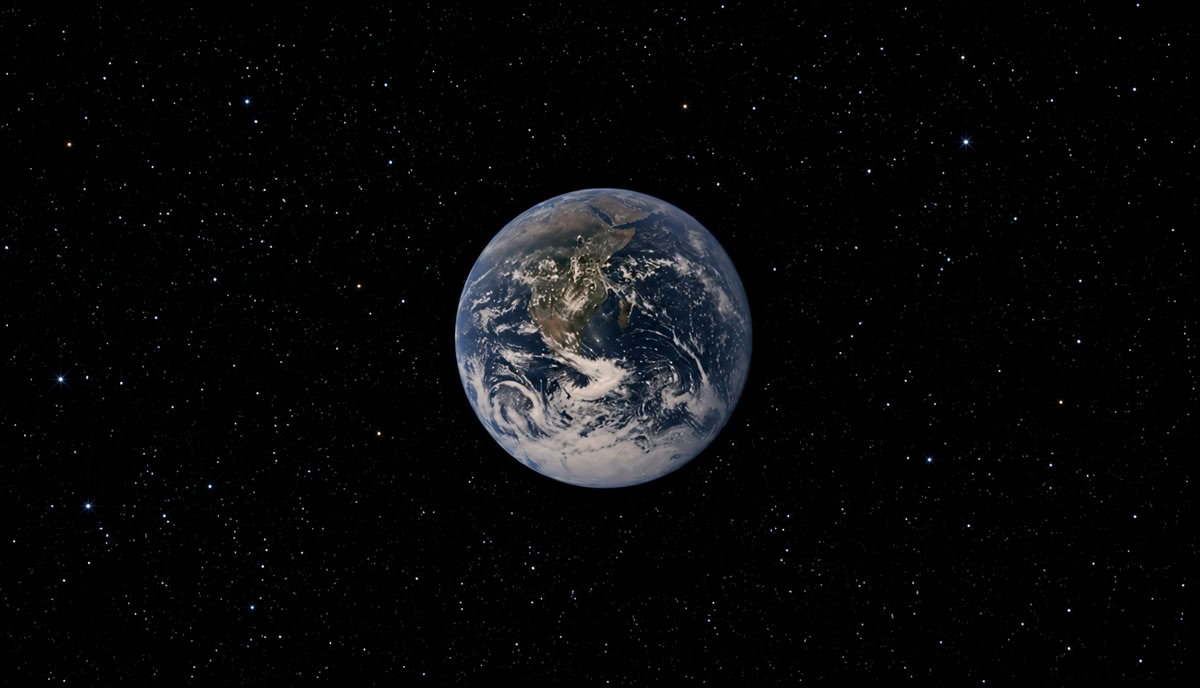
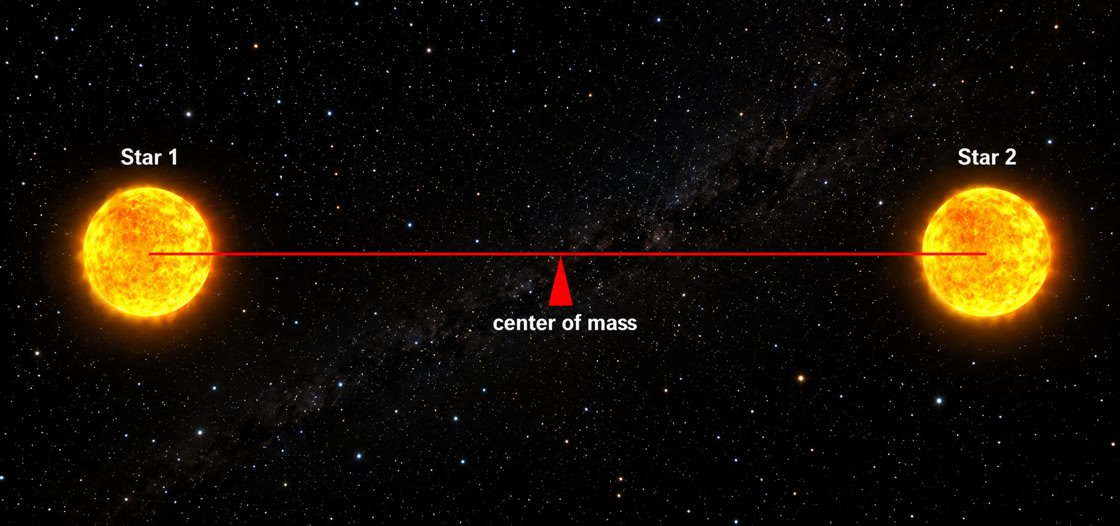
Figure 1: Two stars of equal mass
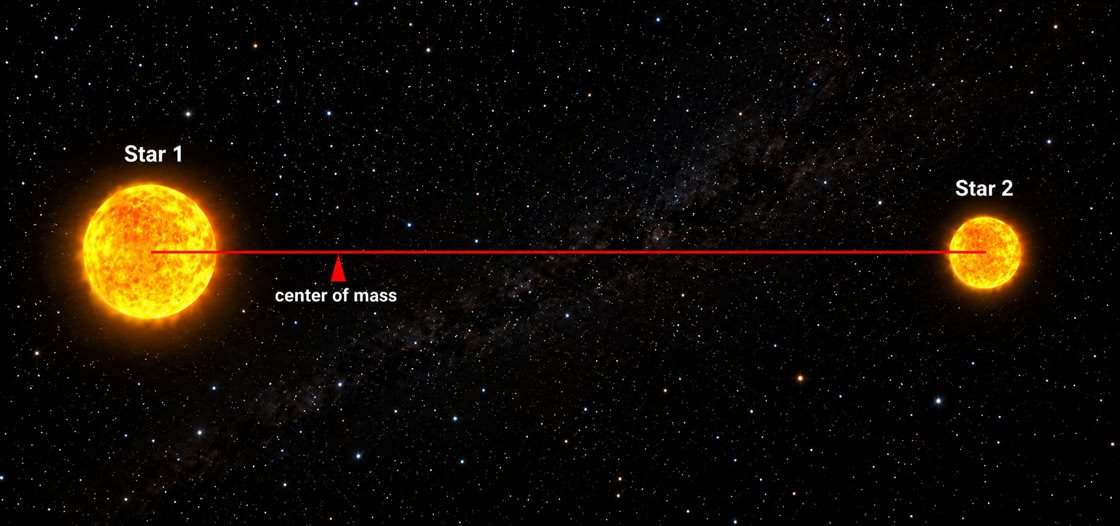
Figure 2: Two stars of unequal mass
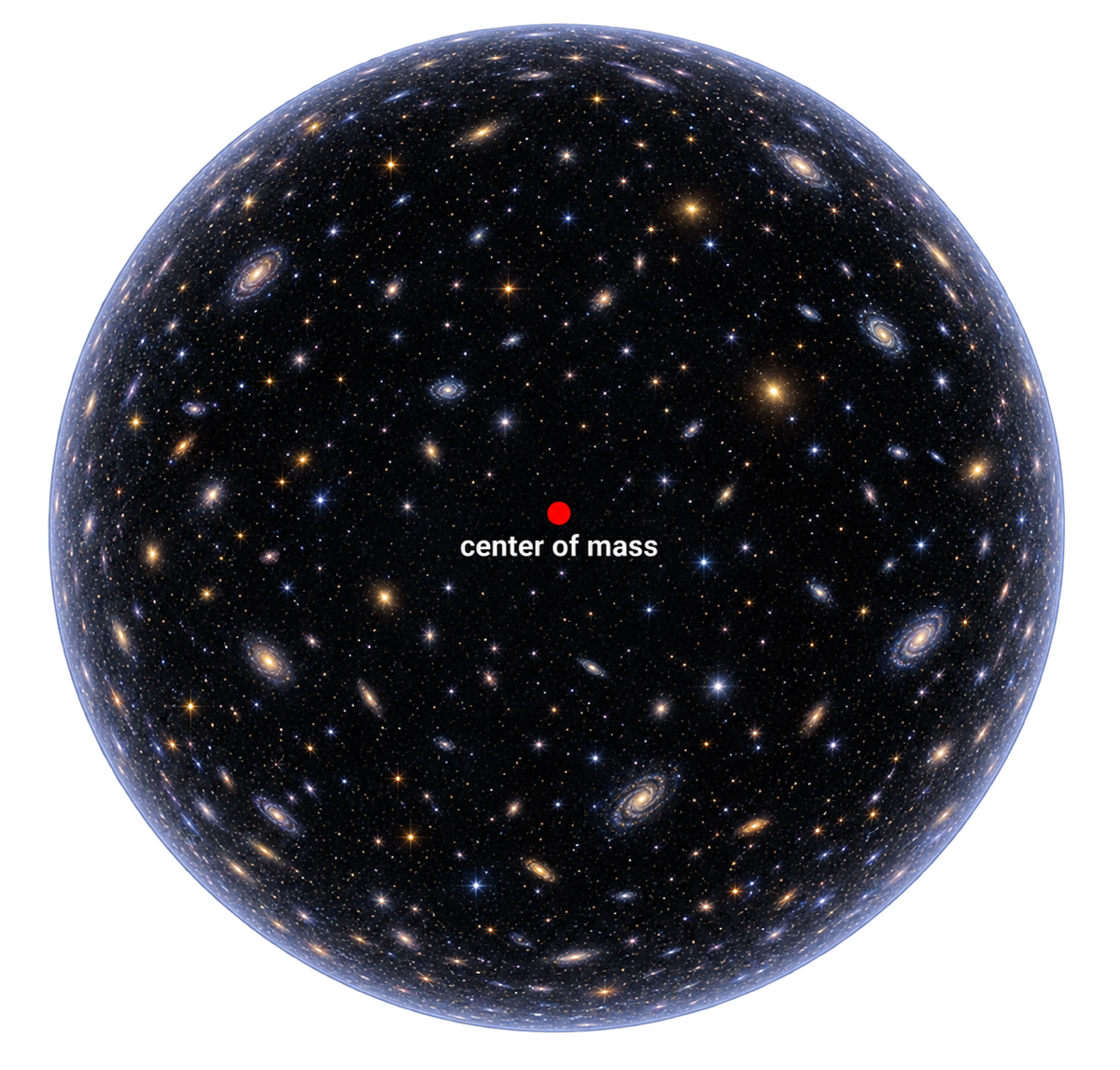
Figure 3: Universe with its common center of mass marked
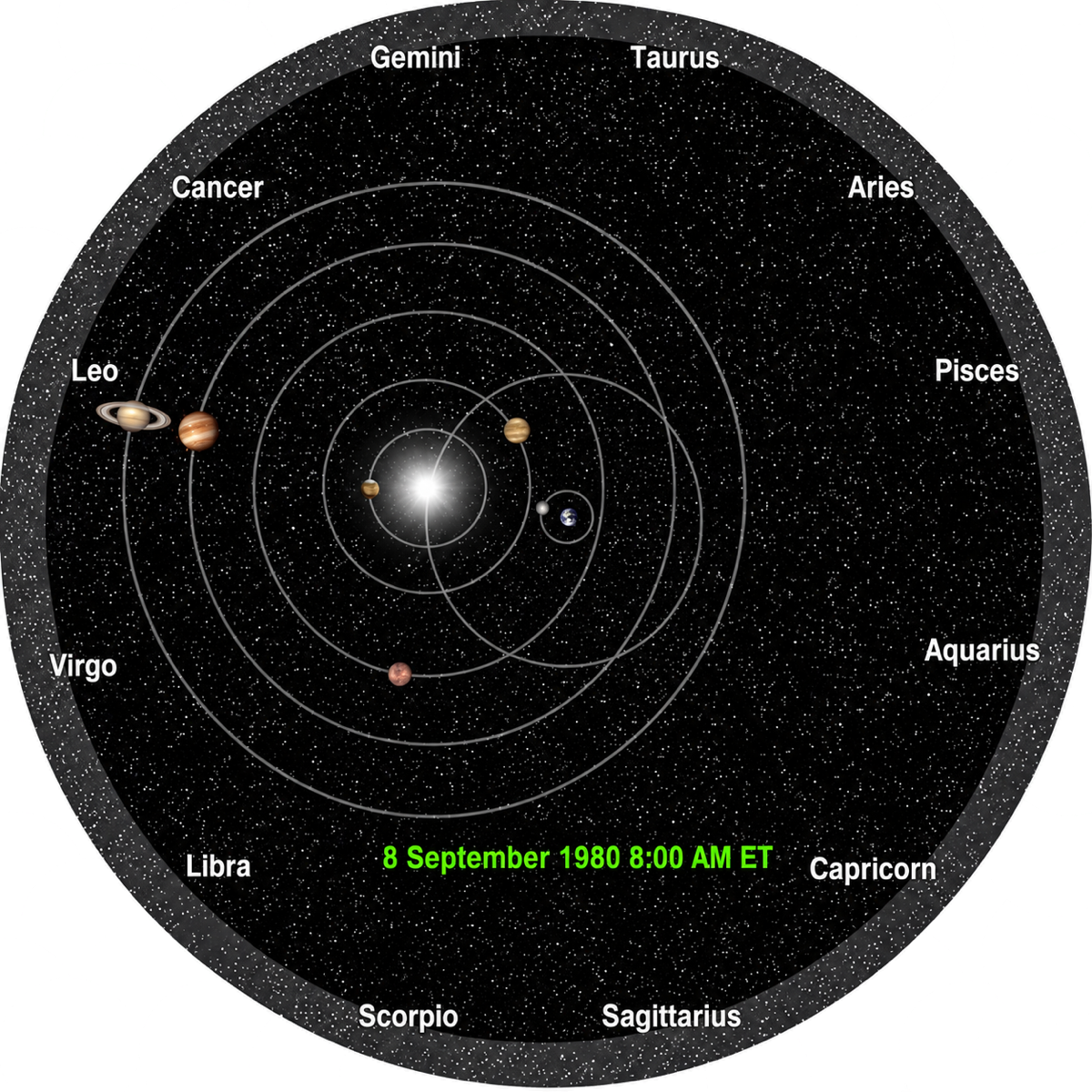
Figure 4: Planetary positions on September 8, 1980
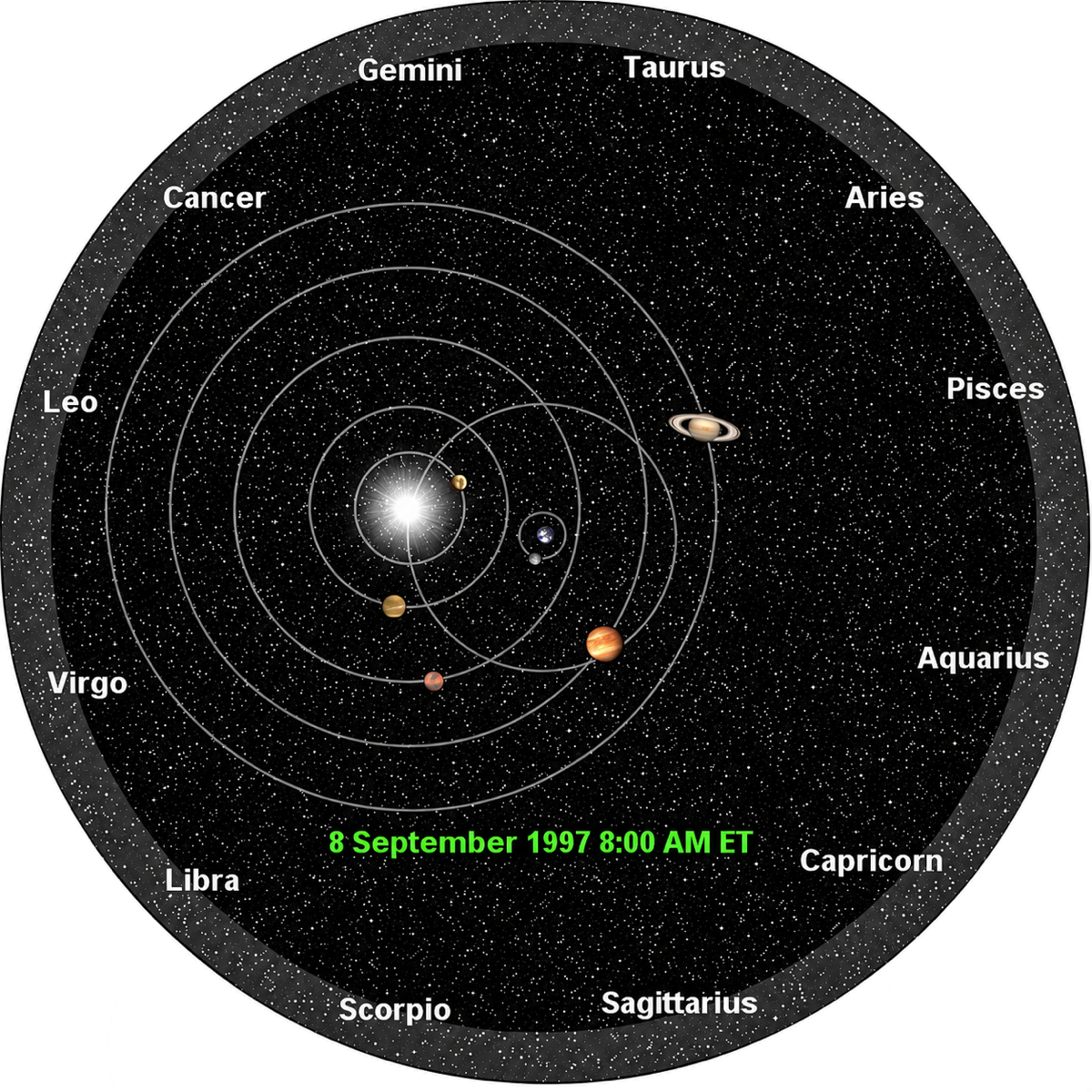
Figure 5: Planetary positions on September 8, 1997
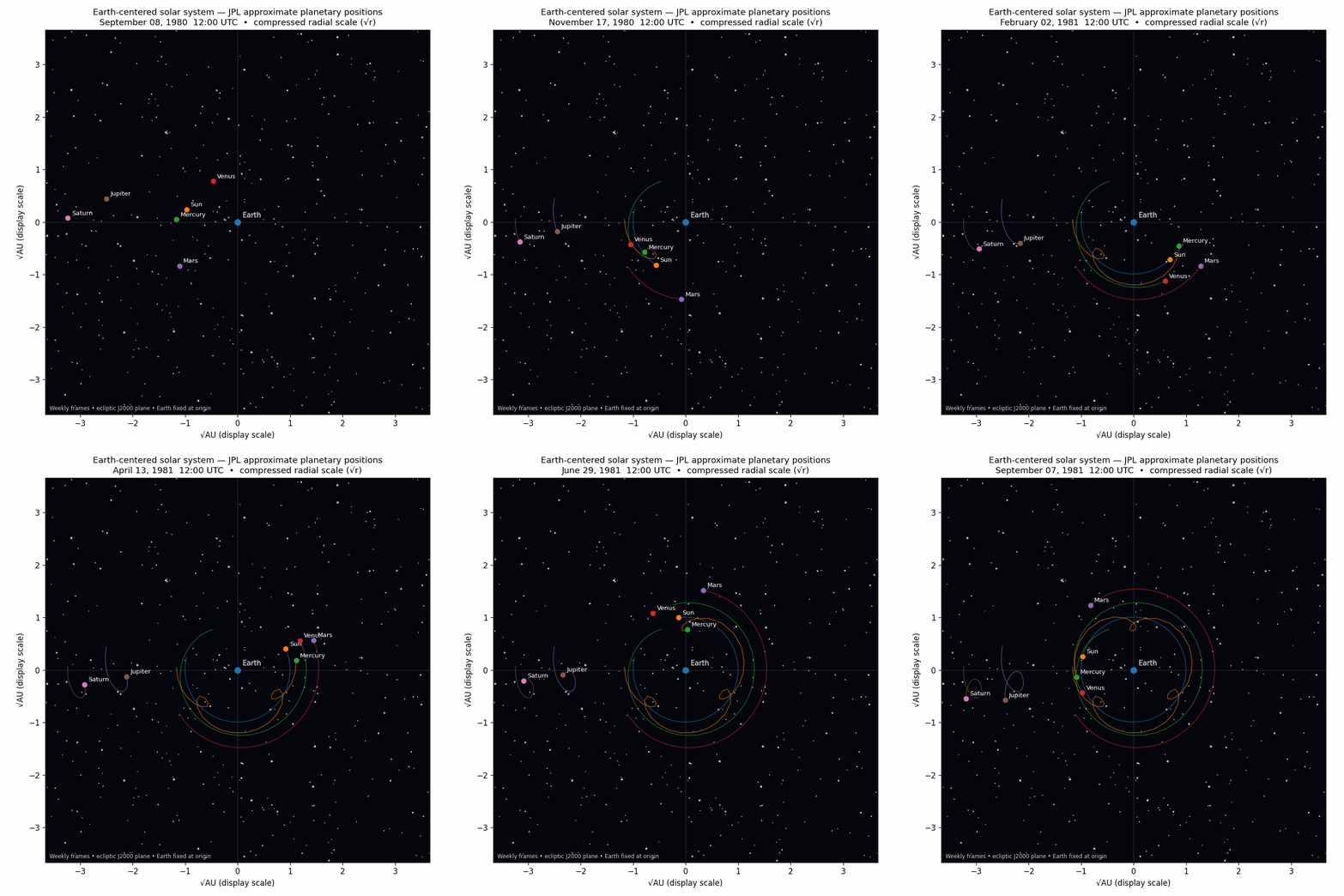
Figure 6: Geocentric solar system over one year
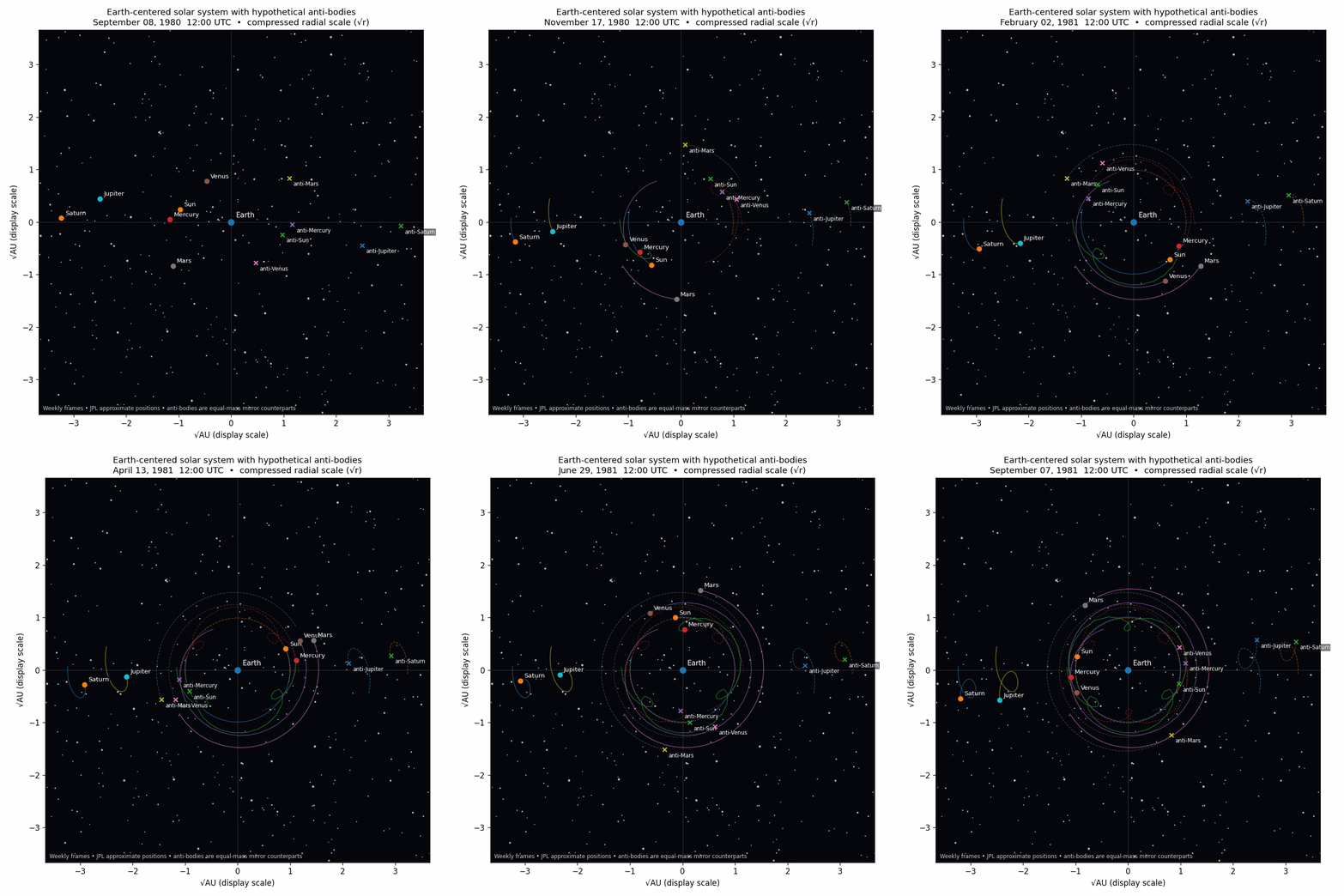
Figure 7: Geocentric solar system with hypothetical anti-planets
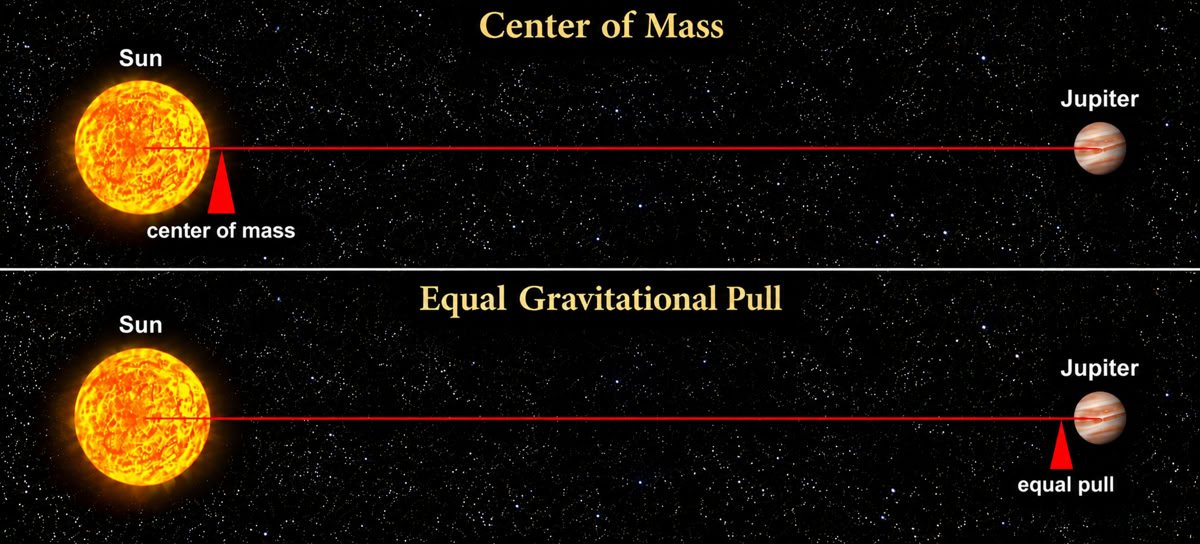
Figure 8: Center of mass / Equal gravitational pull
Archive
Recent Additions


Copyright © 2024-2026 Catholicoutlook.me