Common Objections
Common Objections
Catholic Outlook
Catholic Outlook

Catholic Outlook
Common Objections
Common Objections
__________ Recent Additions __________
Catholic Outlook
Catholic Outlook
__________ Purgatory __________
“The early Christians did not believe in Purgatory. It is a doctrine that arose long after the time of the apostles.”
Gary Hoge
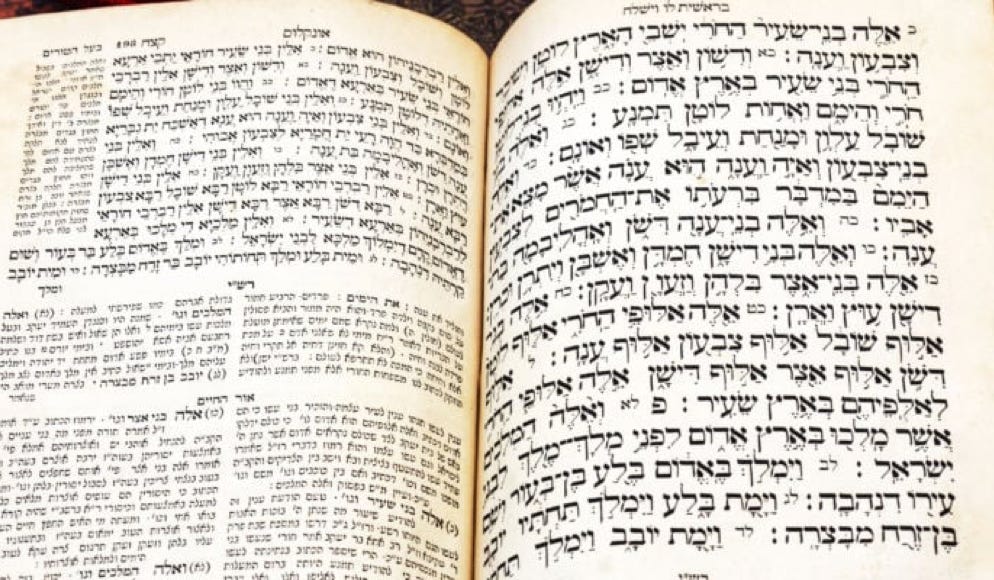
Actually, it is a doctrine that arose long before the time of the apostles. Some of the ancient Jews believed that it was necessary for a soul to be purified before it could enter heaven. According to the followers of Shammai, a first-century Jewish scholar,
In the last judgment day there shall be three classes of souls: the righteous shall at once be written down for the life everlasting; the wicked, for Gehenna; but those whose virtues and sins counterbalance one another shall go down to Gehenna and float up and down until they rise purified; for of them it is said: “I will bring the third part into the fire and refine them as silver is refined, and try them as gold is tried” [Zech. xiii. 9.]; also, “He [the Lord] bringeth down to Sheol and bringeth up again" (I Sam. ii. 6).1
I don’t think the Jews used the name “Purgatory,” but the idea is similar. Nothing impure enters heaven, and therefore some purification must occur between this sinful life and the entrance into the sinlessness of heaven.
We see an example of this in the Jewish Scripture called 2 Maccabees, which was written centuries before the time of Christ. In this book, Judas Maccabeus and his men were recovering the bodies of some men who had fallen in battle. Under their tunics they found sacred tokens of the idols of Jamnia,
“and they turned to supplication, praying that the sin that had been committed might be wholly blotted out. The noble Judas exhorted the people to keep themselves free from sin . . . he also took up a collection, man by man, . . . and sent it to Jerusalem to provide for a sin offering. In doing this he acted very well and honorably, taking account of the resurrection. For if he were not expecting that those who had fallen would rise again, it would have been superfluous and foolish to pray for the dead. But if he was looking to the splendid reward that is laid up for those who fall asleep in godliness, it was a holy and pious thought. Therefore, he made atonement for the dead, so that they might be delivered from their sin.” (2 Maccabees 12:42-45).
The book of 2 Maccabees was part of the Christian Bible for over a thousand years before the Protestant Reformers tossed it out. It is still part of Catholic and Orthodox bibles to this day. But even if you reject the canonicity of this book, it does at least reflect the theology of the Jews before the time of Christ.
The early Christians also prayed for their dead and believed in Purgatory. Indeed, prayer for the dead clearly requires a belief in some form of post-mortem purification, simply because such prayers cannot help those in Hell, and they are not needed by those in Heaven. Thus, prayer for the dead only makes sense if there are some who are not in Hell, but not yet in Heaven, either.
Before we look at the ancient Christian testimony regarding prayer for the dead and Purgatory, I should note that there’s a passage in the New Testament that may be a prayer for the dead. In 2 Timothy, Paul says,
May the Lord grant mercy to the household of Onesiphorus, because he often refreshed me and was not ashamed of my chain; when he arrived in Rome, he eagerly searched for me and found me” (2 Timothy 1:16-17).
It’s interesting that Paul asked for mercy for Onesiphorus’s household, but not for Onesiphorus himself. Then Paul proceeded to eulogize Onesiphorus. It seems clear that Onesiphorus was dead. Then Paul says, “May the Lord grant that he will find mercy from the Lord on that day!” (2 Timothy 1:18). I think the most obvious interpretation of this passage is that it is a prayer for the dead, but it’s not a slam-dunk.
Here are some early Christian witnesses to the practice of prayer for the dead, and belief in Purgatory:
The citizen of a prominent city, I erected this while I lived, that I might have a resting place for my body. Abercius is my name, a disciple of the chaste shepherd who feeds his sheep on the mountains and in the fields, who has great eyes surveying everywhere, who taught me the faithful writings of life. Standing by, I, Abercius, ordered this to be inscribed; truly I was in my seventy-second year. May everyone who is in accord with this and who understands it pray for Abercius.2
If a man distinguish in himself what is peculiarly human from that which is irrational, and if he be on the watch for a life of greater urbanity for himself, in this present life he will purify himself of any evil contracted, overcoming the irrational by reason. If he have inclined to the irrational pressure of the passions, using for the passions the cooperating hide of things irrational, he may afterward in a quite different manner be very much interested in what is better, when, after his departure out of the body, he gains knowledge of the difference between virtue and vice and finds that he is not able to partake of divinity until he has been purged of the filthy contagion in his soul by the purifying fire.3
Temporal punishments are suffered by some in this life only, by some after death, by some both here and hereafter, but all of them before that last and strictest judgment. But not all who suffer temporal punishments after death will come to eternal punishments, which are to follow after that judgment.4
That there should be some fire even after this life is not incredible, and it can be inquired into and either be discovered or left hidden whether some of the faithful may be saved, some more slowly and some more quickly in the greater or lesser degree in which they loved the good things that perish, through a certain purgatorial fire.5
Obviously, belief in prayer for the dead and Purgatory (by whatever name) was a part of the true religion of God both before, during, and after the time of Christ. These beliefs did not arise “long after the time of the apostles.”
__________
1 Kaufman Kohler, “Purgatory,” The Jewish Encyclopedia, https://www.jewishencyclopedia.com/articles/12446/.
2 Abercius, Epitaph of Abercius, A.D. 190.
3 Gregory of Nyssa, Sermon on the Dead, A.D. 382.
4 Augustine, The City of God, 21:13, A.D. 419.
5 Augustine, Handbook on Faith, Hope, and Charity, 18:69, A.D. 421.
Copyright © 2024 Catholicoutlook.me
MENU