Common Objections
Common Objections
Common Objections

Catholic Outlook

Catholicism is a corruption of original Christianity
A common Protestant objection to Catholicism is that the Catholic Church bears little resemblance to the Church Jesus established. According to this view, Christianity began as a relatively simple faith based on the teachings of Jesus and the apostles. Over the centuries, however, the Church gradually introduced doctrines and practices that were foreign to original Christianity. By the time of the Protestant Reformation, the authentic Christian faith had become so obscured by these additions that a return to biblical Christianity was necessary.
It's an appealing explanation, particularly if you begin with the assumption that Protestant Christianity more closely resembles the religion of the apostles. But does the historical evidence support it?
What did original Christianity look like?
If Catholicism is a corruption of original Christianity, we should be able to compare it with the Christianity that existed before the corruption took place.
Fortunately, we have more than the New Testament to help us do that. We also have writings from Christians who lived in the generations immediately following the apostles. Some of these writers knew the apostles personally, while others were taught by those who did.
And we find a Church that already looks remarkably Catholic.
Around A.D. 107, Ignatius of Antioch, a bishop traditionally associated with the apostle John, wrote a series of letters to Christian communities while being taken to Rome for execution.
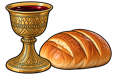
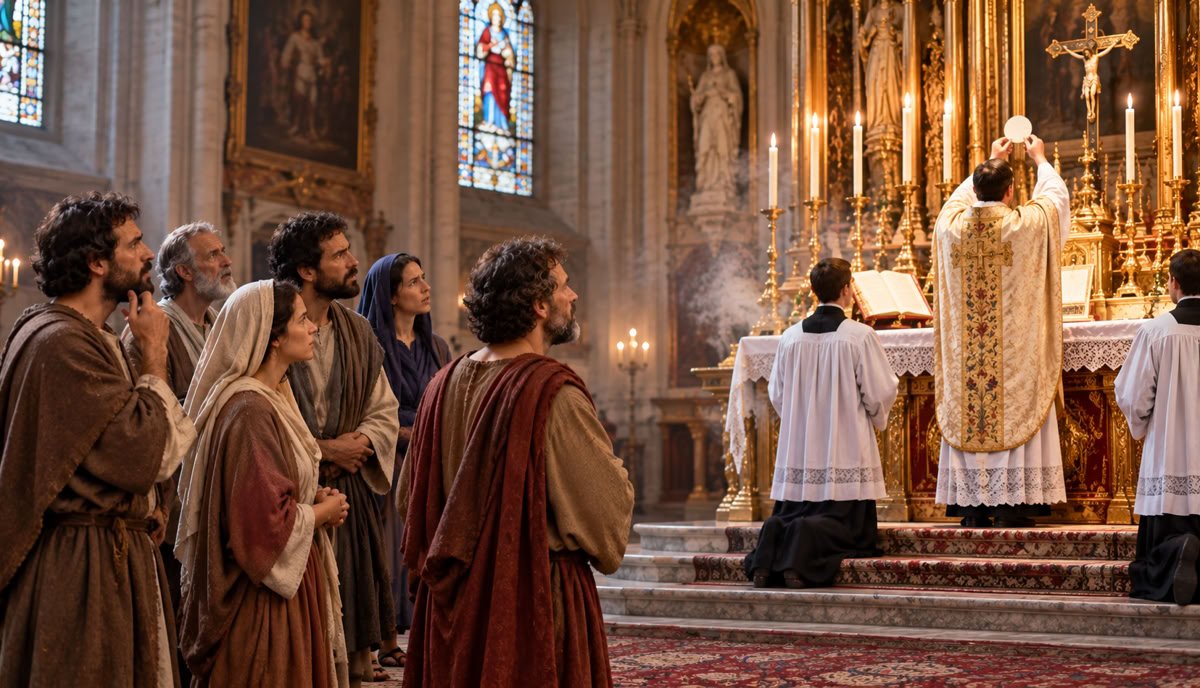
In those letters, he repeatedly emphasized the authority of bishops, the importance of unity with the clergy, and the centrality of the Eucharist.
He wrote:
Let that be deemed a proper Eucharist, which is administered either by the bishop, or by one to whom he has entrusted it (Letter to the Smyrnaeans, 8).1
He also criticized those who rejected the Christian understanding of the Eucharist:
They abstain from the Eucharist and from prayer, because they confess not the Eucharist to be the flesh of our Saviour Jesus Christ (Letter to the Smyrnaeans, 7).1
This is not a description of an informal association of independent congregations, each interpreting Scripture for itself. It is a Church with bishops, an established ministry, and a sacramental understanding of Christian worship.
And Ignatius wasn't proposing a new form of Christianity. He was describing the Church as he knew it, at the beginning of the second century.
The evidence continues
Around A.D. 180, Irenaeus of Lyons confronted various heretical groups that claimed to possess the authentic teachings of Jesus.
He appealed to the teaching preserved in churches founded by the apostles and to the succession of bishops who had inherited their responsibility for preserving it.
He wrote:
It is within the power of all, therefore, in every Church, who may wish to see the truth, to contemplate clearly the tradition of the apostles manifested throughout the whole world (Against Heresies, 3.3.1).2
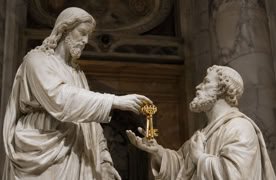
Irenaeus then pointed specifically to the Church at Rome, tracing its succession of bishops back to Peter and Paul.
When confronted with competing claims about what Christianity originally taught, Irenaeus did not tell Christians simply to read the Bible and decide for themselves. He directed them to the churches that had preserved the apostles' teaching through an identifiable succession of leaders. That is a distinctly Catholic way of understanding Christian authority.
We find similar evidence in the writings of Justin Martyr, who, around A.D. 155, described a Eucharistic celebration in which Christians believed the consecrated bread and wine were the flesh and blood of Jesus (First Apology, 66).3
These beliefs were not invented by medieval theologians. They were already part of Christian life centuries before the Reformation.
When did the corruption begin?
If the Catholic Church departed from original Christianity, when did that departure occur?
Some critics point to the conversion of Emperor Constantine in the fourth century, claiming that Christianity became corrupted when it acquired imperial favor and began absorbing pagan beliefs and practices.
But that explanation doesn't account for the evidence we've just examined. Ignatius, Justin Martyr, and Irenaeus all lived long before Constantine. The episcopal structure of the Church, its sacramental understanding of the Eucharist, and its appeal to apostolic Tradition were already established.
Other critics place the corruption earlier, perhaps in the second century.
But that creates an even more serious problem. Ignatius was writing within a generation of the death of the last apostle. If the Christianity he described was already a corruption, then the original faith must have disappeared almost immediately after the apostles themselves.
Catholic author and former Protestant Mark Shea illustrates the difficulty of believing this theory:
It meant that for sixty years of blood, sweat, and toil, the apostles made thousands of disciples so stupid that they could not grasp the most elementary teachings of their faith. It meant believing that their churches—all of them in north, south, east, and west—paganized Christianity (and paganized it everywhere in the same way) the instant the apostles died. It meant believing that these churches, together with their overseers who had been handpicked by the apostles, were constantly engaged in a schizophrenic campaign of deliberate pagan perversion of the Faith while simultaneously dying in droves for the purity of that Faith. … It meant believing that in some fantastic fashion quite unparalleled in history, this outburst of amnesia, heresy, and schizophrenia (beginning well before the death of the Apostle John and spanning the length and breadth of the Roman Empire) managed to completely pervert the Faith once given to the saints without one of those saints taking any notice at all—the very same saints who were willing to be burned alive for Christ rather than offer a tiny pinch of incense to Caesar.4
There were certainly disagreements and heresies in early Christianity. But the existence of disagreements is not evidence that the Christianity represented by Ignatius and Irenaeus was a corruption of some earlier Protestant form of the faith.
Where is the evidence of this extraordinary transformation? Where are the Christian communities that preserved the original faith? Where are their bishops, teachers, and writings? And how did the same corruption spread throughout the Christian world almost immediately after the apostles died?
Development is not corruption
Of course, the Catholic Church of today does not look exactly like the Church of the first century.
Catholics have never claimed that every doctrine was expressed with the same precision, or that every religious practice existed in its present form, from the day of Pentecost.
Christian doctrine developed as the Church reflected on the revelation entrusted to it, confronted controversies, and clarified what it believed.
Consider the doctrine of the Trinity.
Christians today profess that God is one divine being in three distinct persons. But the New Testament does not present that doctrine in the precise terminology later adopted by the Church. The theological vocabulary and formal definitions emerged over centuries, particularly as Christians responded to controversies about the relationship between the Father, Son, and Holy Spirit.
Does that mean the Trinity was invented centuries after Christ?
Of course not. The doctrine developed as Christians sought to express more precisely what had been revealed from the beginning.
The same distinction applies to Catholic doctrines.
Consider the Immaculate Conception, which was formally defined as dogma in 1854. Does that mean Catholics invented the belief in 1854? Of course not. The date of a doctrinal definition tells us when the Church formally defined a teaching, not when the underlying belief originated.
The question is whether that definition represents an authentic development of the apostolic faith.
A corruption contradicts or replaces what came before. An authentic development makes more explicit what was already present.
Catholics maintain that their doctrines represent authentic developments of the faith handed down by the apostles. Protestants may disagree about particular doctrines, but merely demonstrating that a doctrine developed over time does not establish that it is a corruption.
And the same standard applies to Protestant doctrines. The fact that a particular formulation became prominent during the Reformation does not, by itself, prove that it was a sixteenth-century invention.
Did the Reformers restore original Christianity?
The Protestant Reformers believed that the Church had departed from important biblical teachings. They sought to correct what they regarded as serious errors, particularly concerning salvation, religious authority, and certain Church practices.
But there is a difference between arguing that the Catholic Church needed reform and arguing that Catholicism itself was a corruption of Christianity.
The Catholic Church acknowledges that its members, including popes and bishops, have sometimes committed grave sins. It also acknowledges that abuses and harmful practices have arisen within the Church and needed correction.
But the misconduct of Church leaders does not establish that the Church's doctrines are false, any more than the sins of the apostles establish that their teaching was false.
If the Reformers were restoring original Christianity, we should expect to find their distinctive understanding of the faith reflected in the earliest Christian writings. But we don’t.
Which Christianity is the original?
Which form of Protestantism supposedly represents the original?
Lutherans, Baptists, Presbyterians, Methodists, Pentecostals, and other Protestant groups disagree about baptism, the Eucharist, predestination, the possibility of losing salvation, Church government, and other important matters.
If Catholicism represents a departure from original Christianity, which of these competing Protestant understandings is the one that existed before the corruption? And where is the historical evidence that it existed?
The question is not whether individual Protestant doctrines can be defended from Scripture. That is a separate discussion. The question is whether history supports the claim that the Christianity of the apostles was replaced by Catholicism and then recovered centuries later.
The surviving evidence points in a very different direction.
Conclusion
The earliest Christian writings describe a Church with bishops, apostolic succession, authoritative Tradition, and a sacramental understanding of worship. These are not medieval inventions.
Anyone who claims that Catholicism corrupted original Christianity must explain when that corruption occurred, where the original faith survived, and why the earliest surviving Christian witnesses look so much more Catholic than Protestant.
Perhaps the reason early Christianity looks so Catholic is that Catholicism isn't a corruption of original Christianity.
Perhaps it's the fruition of it.
__________
1 Ignatius of Antioch, Letter to the Smyrnaeans, 7–8. https://www.earlychristianwritings.com/text/ignatius-smyrnaeans-roberts.html
2 Irenaeus of Lyons, Against Heresies, 3.3.1–3. https://www.newadvent.org/fathers/0103303.htm
3 Justin Martyr, First Apology, 65–67. https://www.newadvent.org/fathers/0126.htm
4 Mark Shea, By What Authority? (Huntington, IN: Our Sunday Visitor, 1996), 157.
Copyright © 2024–[YEAR] Catholicoutlook.me