Scripture and Tradition
Scripture and Tradition
Scripture and Tradition
Scripture and Tradition
Scripture and Tradition
Scripture and Tradition
Scripture and Tradition

Catholic Outlook

Catholic Outlook
Catholic Outlook
Does Scripture Alone Teach Scripture Alone?
Putting sola Scriptura to its own test
Imagine that your car has broken down. You open the hood, get out your tools, and get ready to repair it.
But instead of consulting a repair manual, you open your Bible.
For some reason, though, you can't find the chapter in Leviticus on replacing a water pump or the psalm about diagnosing a faulty ignition system. It turns out the Bible isn’t going to help you repair your car. Nor will it help you do your taxes, assemble furniture, cook a roast, or learn calculus.
Does that mean there's something wrong with the Bible?
Of course not. The Bible is the inspired Word of God. It is perfect for the role God intended it to fill, but he didn't intend it to fill every role. Obviously, he didn't intend it to be an automobile repair manual, a tax guide, a cookbook, or a host of other things.
So we have to ask ourselves whether the roles the Protestant Reformers assigned to the Bible in their sola Scriptura doctrine are roles the Bible was meant to fulfill. If not, it's no fault of the Bible if it doesn’t fulfill them.
And what are those roles? Advocates of sola Scriptura tell us that Scripture is the Church's only infallible rule of faith, that all Christian doctrines must be established from Scripture, and that Scripture is the supreme judge of all religious controversies.
For example, Faith Baptist Church, an independent Fundamentalist Baptist congregation, declares:
The Bible is our only authority for faith and practice (II Tim. 3:15–16). We reject the authority of tradition and church counsels.1
Notice that Faith Baptist cites 2 Timothy 3:15–16 to support its position. Keep that passage in mind. We'll come back to it later.
And concerning the resolution of religious controversies, the Westminster Confession of Faith declares:
The supreme judge by which all controversies of religion are to be determined ... can be no other but the Holy Spirit speaking in the Scripture.2
But does the Bible itself tell us that it contains everything Christians are required to believe? And does it tell us that it is supposed to serve as the supreme judge of every doctrinal controversy?
Can sola Scriptura pass its own test?
We've already examined the second question in The Great Irony of Sola Scriptura. In this article, let's tackle the first: Does Scripture alone teach Scripture alone?
If sola Scriptura is true, then it should be able to pass its own test. If every Christian doctrine must be established from Scripture, then the doctrine that every Christian doctrine must be established from Scripture must itself be established from Scripture.
As my teachers used to say, "Show your work."
And if we're supposed to reject doctrines that cannot be established from Scripture, then shouldn't we reject sola Scriptura if it can’t be established from Scripture?
The question, then, is whether Scripture tells us that all Christian doctrines must be established from its pages alone, and whether those pages contain the complete account of Christian doctrine that would make that possible in the first place.
Let's take the second question first. To determine whether the New Testament contains such an account, we need to consider how its books came to be written, who they were written for, and what their authors intended to communicate.
The Christian Church obviously didn't begin with the New Testament. It began with the preaching of the apostles.
On Pentecost, Peter preached to the crowds in Jerusalem, and about three thousand people were baptized (Acts 2:41). Those new Christians devoted themselves to “the apostles' teaching and to fellowship, to the breaking of bread and to prayer” (Acts 2:42).
As Christianity spread, the apostles and their coworkers established communities of believers throughout the Roman world. They preached the gospel, baptized converts, instructed them in the faith, celebrated the Eucharist, appointed leaders, and taught Christians how to live.
Only later did the apostles and their associates begin writing the documents that, a few centuries later, would become known as the New Testament.3
And those documents were written for particular purposes, generally to people who were already familiar with Christianity.
To whom was the New Testament written?
Paul's letters to the Corinthians, Galatians, Philippians, and Thessalonians were addressed to Christian communities. His letters to Timothy and Titus were addressed to men already engaged in leading and instructing churches.
Peter wrote to believers scattered throughout Asia Minor. James addressed the twelve tribes scattered among the nations. The letter to the Hebrews was written to people already familiar with the Christian faith and its relationship to the Old Testament.
Paul frequently addressed controversies, corrected abuses, answered questions, encouraged believers, and reminded them of things they had previously been taught.
Neither Paul nor any other New Testament writer attempted to explain the whole Christian faith, and nothing in their writings suggests that putting them all together would produce a complete account of Christian doctrine.
Even the Gospels, which recount the life and teachings of Jesus, weren't intended to provide an exhaustive manual of Christian doctrine and practice.
Luke explains that he wrote his Gospel so that Theophilus might know the certainty of the things he had already been taught (Luke 1:4).
John tells us that he selected particular signs of Jesus so that his readers might believe that Jesus is the Messiah and have life in his name (John 20:30–31). He later adds that if everything Jesus did were recorded, “I suppose that even the whole world would not have room for the books that would be written” (John 21:25). So, apparently, much was left unwritten.
John's Gospel and the other New Testament writings had important purposes, but none of their authors claimed to be setting down everything Christians would ever need to know about their faith.
The apostles even tell us they didn't write everything down
We can see this throughout the New Testament.
Writing to the Thessalonians about the events preceding Christ's return, Paul says:
“Don't you remember that when I was with you I used to tell you these things?” (2 Thessalonians 2:5).
Apparently, Paul had already explained these matters in person. His letter refers to that instruction without repeating all of it.
Elsewhere, Paul praises the Corinthians for holding to the traditions he had passed on to them (1 Corinthians 11:2). And he explicitly instructs the Thessalonians:
“So then, brothers and sisters, stand firm and hold fast to the teachings we passed on to you, whether by word of mouth or by letter” (2 Thessalonians 2:15).
And writing to Timothy near the end of his life, Paul instructs him:
“And the things you have heard me say in the presence of many witnesses entrust to reliable people who will also be qualified to teach others” (2 Timothy 2:2).
Notice what's happening. Paul isn't merely telling Christians to preserve the teachings they've received orally. He's instructing Timothy to pass those teachings on to others, who will, in turn, teach still others.
And there's no suggestion that this process of transmitting apostolic teaching from one generation of Christians to the next was supposed to end once the apostles were gone or their writings had been collected into a New Testament.
Fifteen centuries later, the Protestant Reformers would insist that all Christian doctrine must be established from Scripture. Yet the apostles themselves didn't seem particularly concerned about committing everything they taught to writing. Sometimes they explicitly stated that they intended—and even preferred—to communicate additional instruction in person rather than in writing.
After addressing abuses surrounding the Lord's Supper, Paul told the Corinthians, “And when I come I will give further directions” (1 Corinthians 11:34).
John was even more explicit:
“I have much to write to you, but I do not want to use paper and ink. Instead, I hope to visit you and talk with you face to face, so that our joy may be complete” (2 John 12).
He expressed the same preference in 3 John 13–14.
At this point, someone might object that sola Scriptura doesn't claim that everything the apostles taught was put in writing, but only that Scripture contains everything necessary for Christian doctrine and practice. Okay, but the burden of proof is on the one making the claim. They need to prove that the apostles put all essential teachings into writing, not just assert that they must have because otherwise sola Scriptura wouldn’t work.
And there are good reasons to think they might not have written down everything they considered important.
Why would the apostles write down what everyone already knew?
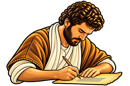
Remember that writing in the first century wasn't like writing today. The biblical writers couldn't go to Walmart and buy a ream of printer paper and a ballpoint pen. They had to repeatedly dip a reed pen into ink and write on papyrus or parchment. Writing was laborious, materials were expensive, and there was only so much room on a scroll.4
So the apostles had plenty of incentive to be economical with their words. Why would they waste considerable time and expensive materials explaining things their readers already knew?
They didn’t. Their letters frequently addressed particular problems or questions their readers had about the teaching they’d already received, but none of them attempted to provide a complete account of the Christian faith.
Consequently, the New Testament tells us a great deal about matters that were controversial, misunderstood, or being abused. But it may say comparatively little about practices that were already familiar and weren't causing problems.
We shouldn't assume that the amount of attention a subject receives in the New Testament reflects its importance. The apostles often wrote about things that were misunderstood, disputed, or being abused. But when a doctrine or practice was already understood and accepted, there might have been little reason to mention it. In fact, the more universally understood something was, the less reason there might have been to write about it.
That doesn't necessarily mean those things were unimportant. It might simply mean there was no particular reason to discuss them in a letter.
And this brings us to an interesting example.
What about infant baptism?
The New Testament repeatedly commands baptism and describes its importance. But it never explicitly tells us whether Christian parents should baptize their infants.
For Christians who believe in sola Scriptura, that silence creates a problem, and it was a problem that showed up almost from the start of the Reformation.
The leading Protestant Reformers—including Luther, Calvin, and Zwingli—all defended infant baptism, reasoning from such things as the baptism of entire households and God's promises to believers and their children. But other Reformers, including Conrad Grebel, Felix Manz, and Balthasar Hubmaier, rejected it, believing that Scripture taught only the baptism of people who professed faith in Christ. Both groups appealed to Scripture, yet they reached opposite conclusions about a practice that Christians had followed for centuries.5
But consider the question from the perspective of the earliest Christian communities. Unlike the Reformers, who had to determine what the apostles taught about baptism from writings that didn't specifically address the question, the early Christians already knew what the apostles taught because they’re the ones they taught it to.
In the early Church, did Christian parents bring their babies to be baptized, or did they wait until their children were old enough to profess their own faith? Whatever the answer was, those Christian parents would have known it.
And once they knew it, why would Paul or another apostle need to repeat the instruction in a letter? It was a yes-or-no question. You either baptized babies or you didn't. And if everyone already knew the answer, there probably wouldn't have been any reason to mention it.
The silence of the New Testament, therefore, doesn't establish that the apostles never addressed the question, or that it wasn’t important. It may simply mean that they had already addressed it in person and didn't feel the need to mention it again.
And that's the important point: The absence of an instruction in Scripture doesn't establish the absence of an instruction in the apostolic Church.
Could the New Testament have taught sola Scriptura?
There's another important consideration, and it's devastating to the supposed biblical case for sola Scriptura. Listen to Protestant apologist James White:
Protestants do not assert that sola scriptura is a valid concept during times of revelation. How could it be, since the rule of faith to which it points was at that very time coming into being? One must have an existing rule of faith to say it is “sufficient.” It is a canard to point to times of revelation and say, “See, sola scriptura doesn't work there!” Of course it doesn't. Who said it did?6
Ponder the implications of that for a moment.
Protestants frequently appeal to New Testament passages to establish sola Scriptura. They cite statements such as “Do not go beyond what is written” (1 Corinthians 4:6) and “All Scripture is God-breathed” (2 Timothy 3:16). If you remember, Faith Baptist Church cited that last verse to support its claim that the Bible is its only authority for faith and practice.
But according to White, sola Scriptura couldn't apply while divine revelation was still being given. And every New Testament letter was written during that period. Including 1 Corinthians and 2 Timothy.
That means that those passages, and the others that Protestants allege teach sola Scriptura, can't be instructing their original readers to go by Scripture alone, because Scripture wasn’t finished being written yet.
And if they weren't telling their original audiences that Scripture was supposed to be their only authority for faith and practice—which it couldn’t be—then they aren’t telling us that, either. Whatever those passages meant to their original audience is what they mean still. We can't use them two thousand years later to make Paul say something he wasn't saying about a subject he wasn't addressing, just because they sound like they support our position on some other topic.
We have to discover what Scripture teaches, not recruit its words to support a doctrine we've already decided to believe. A doctrine isn't established from Scripture merely because we can find biblical passages that sound consistent with it. We have to demonstrate that the doctrine actually follows from what Scripture teaches.
And in this case, not only does the New Testament not teach sola Scriptura as an apostolic practice, according to White, it can't teach sola Scriptura as an apostolic practice.
Of course, the apostles could have taught that once divine revelation ended, the Church would adopt Scripture as its sole infallible rule of faith. But did they?
I don't know of any passage that says, or even implies, that after the apostles were gone and some of their letters were compiled into something called a “New Testament,” the Church would adopt a different rule of faith. Do you?
Conclusion
James White is correct that sola Scriptura couldn't have been the rule of faith and practice for the apostolic Church because the New Testament was still being written. That means the passages Protestants commonly cite to establish sola Scriptura couldn't have been instructing their original readers to practice it. And if they weren't teaching it then, they aren't teaching it now.
It's certainly possible that sola Scriptura could have become the Church's rule after the apostolic age. But by sola Scriptura's own standard, there would have to be some teaching to that effect in the New Testament, and there isn't.
We've also established three important facts.
First, during the apostolic age, Christian doctrine was transmitted both orally and in writing. Paul explicitly instructed the Thessalonians to hold fast to the teachings they'd received, whether by word of mouth or by letter (2 Thessalonians 2:15). Catholics and Protestants agree on that.
Second, the New Testament never says or implies that all essential Christian doctrine had been committed to writing or that it ever would be. The New Testament letters were written to Christians who already possessed considerable religious knowledge, and their authors never claimed to be recording everything Christians needed to know about their faith.
Third, the New Testament never says or implies that after the apostolic age Christians were supposed to stop relying on the oral teachings they had received during that time. On the contrary, near the end of his life, Paul instructed Timothy to pass on what he'd heard to reliable people who would teach others in turn. Far from suggesting that oral apostolic teaching would eventually become unnecessary, Paul was making arrangements for its continued transmission after his death.
The first point isn't disputed. But for sola Scriptura to be established from Scripture, the New Testament would have to teach that Scripture contains everything necessary for Christian doctrine, and that after the death of the last apostle, the Church was supposed to rely exclusively on the written record.
The New Testament never tells us either of those things.
Therefore, the claim that after the apostolic age all essential Christian doctrines must be established from Scripture alone cannot itself be established from Scripture alone, and sola Scriptura fails its own test.
__________
1 Faith Baptist Church (Folsom, California), “Our Distinctives,” under “B — The Bible.” https://folsom.church/disctinctives.
2 Westminster Confession of Faith (1646), chapter 1, section 10, “Of the Holy Scripture.” Westminster Theological Seminary.
3 David Brakke, “Canon Formation and Social Conflict in Fourth-Century Egypt: Athanasius of Alexandria's Thirty-Ninth Festal Letter,” Harvard Theological Review 87, no. 4 (1994): 395–419. Athanasius's Festal Letter of A.D. 367 is the earliest surviving document listing precisely the 27 books of the present New Testament. Earlier collections of Christian writings existed, but recognition of the complete canon developed over several centuries. Cambridge University Press.
4 Adam Bülow-Jacobsen, “Writing Materials in the Ancient World,” in The Oxford Handbook of Papyrology, ed. Roger S. Bagnall (Oxford: Oxford University Press, 2009), 3–29. Discusses the writing materials of the ancient Mediterranean world, particularly papyrus and parchment. Oxford Academic.
5 Amy Nelson Burnett, Debating the Sacraments: Print and Authority in the Early Reformation (Oxford: Oxford University Press, 2019), chapter 13, “Sacramentarian Diversity.” Examines the dispute over infant baptism between Zwingli and Balthasar Hubmaier. See also “Anabaptists,” New Catholic Encyclopedia, for the early Swiss Brethren, including Conrad Grebel and Felix Manz, and their rejection of infant baptism. Oxford Academic.
6 James White, “A Review and Rebuttal of Steve Ray's Article, Why the Bereans Rejected Sola Scriptura,” Alpha and Omega Ministries, April 29, 1998, section “Sola Scriptura: Misrepresented AGAIN.” Original article.

Featured Articles
Copyright © 2024–[YEAR] Catholicoutlook.me