Scripture and Tradition
Scripture and Tradition
Scripture and Tradition
Scripture and Tradition
Scripture and Tradition
Scripture and Tradition
Scripture and Tradition

Catholic Outlook

Catholic Outlook
Catholic Outlook
The Great Irony of Sola Scriptura
Making Scripture the supreme judge puts the individual in charge
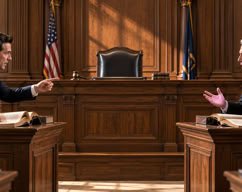
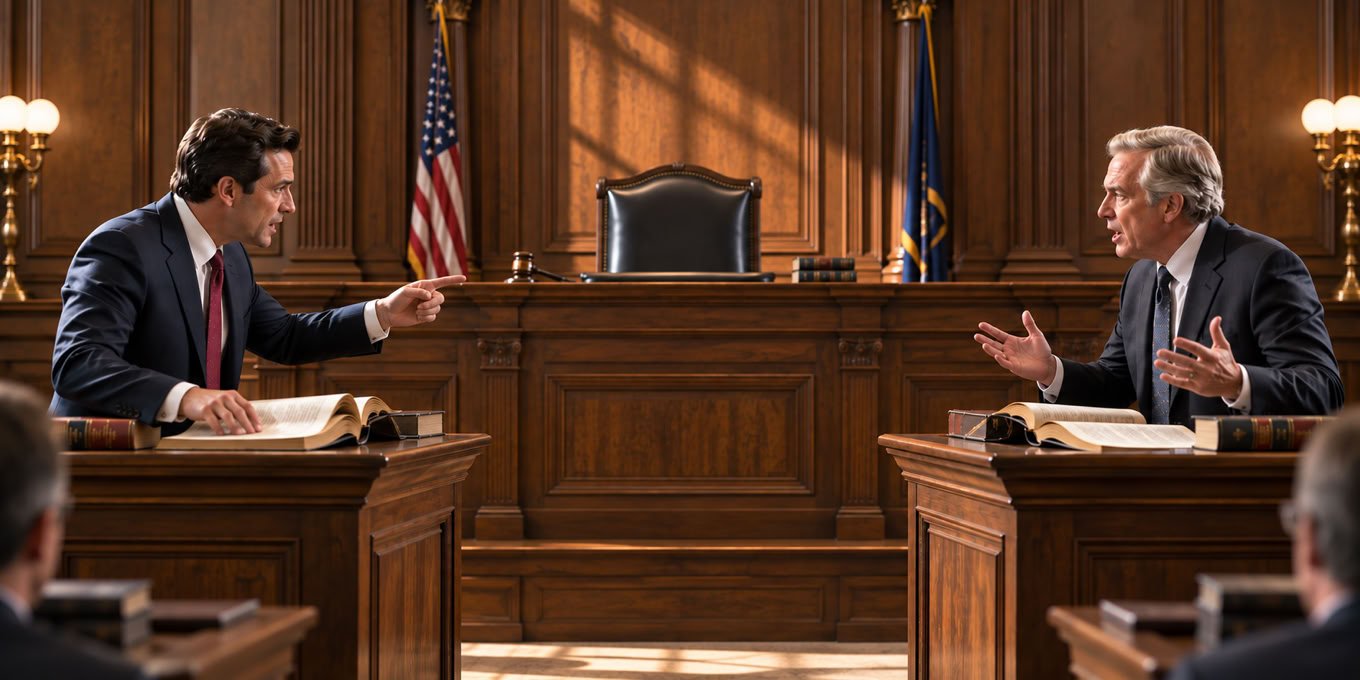
Imagine a courtroom in which two attorneys are arguing a point of law. Each cites precedents from the same books of case law. Each argues that those precedents support his position in the case at hand. And each insists that his interpretation is correct.
But when the attorneys have made their case and it's time for the judge to rule, it turns out there is no judge. There are only the law books. And the attorneys. All they can do is keep arguing.
Now imagine someone proposing a solution: “Let's let the books of case law themselves be the judge. Let them decide who's right, and you guys just agree to what they say.”
I can see the attorneys rolling their eyes. What do you think we’ve been doing? They've already based their arguments on those books. They respect the authority of the precedents they contain. But they disagree about what those precedents mean and how they apply to the case at hand.
How are those books supposed to decide which interpretation is correct? They can't. That's not how books work. The attorneys would gladly accept an authoritative ruling, but the books can't issue one. Only a judge can do that.
And that illustrates a fundamental problem with the Protestant doctrine of sola Scriptura. In attempting to make Scripture the supreme judge of Christian doctrine, it gives the Bible a judicial role it can’t fulfill. No book, not even an inspired one, can render decisions. Nor can it intervene in a dispute over its meaning and declare which side is correct.
Can Scripture really be the supreme judge?
This isn't just my characterization of sola Scriptura. Protestant confessions themselves use the language of a supreme judge.
The Westminster Confession of Faith, a historic Presbyterian statement of faith, declares:
The supreme judge by which all controversies of religion are to be determined ... can be no other but the Holy Spirit speaking in the Scripture.1
And Sovereign Grace Bible Church in Phoenix, Arizona, similarly declares that Scripture “is the highest authority in the church and the final judge of all church teaching.”2
There's something appealing about that idea. Scripture is the inspired Word of God, so making Scripture the supreme judge sounds very much like making God himself the supreme judge.
And what Christian could object to that?
But if we take those words at face value and conclude that those groups really intend to treat the Bible like a judge, it's clear they're giving the Bible a job no book could do. Calling something the supreme judge doesn't make it capable of exercising judicial authority. And unless it can actually make a judgment when there's a disagreement, what good does it do to call it the judge?
But despite how those declarations are worded, I don’t think they’re meant to be taken quite that literally. I think they mean that because Scripture is the inspired Word of God, whatever it says is final and overrules anything your priest or pastor may say, anything a theologian may argue, or anything a church council may declare. In other words, in any dispute, Scripture gets the last word.
That’s great as long as everyone agrees on what Scripture is saying. But what happens when they don’t?
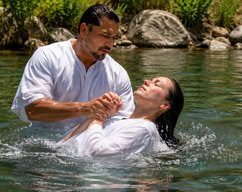
To take a concrete example, Presbyterians believe that Scripture teaches us to baptize infants. Baptists believe it teaches us to baptize only those who personally profess faith in Christ.3 Both sides have been studying Scripture for centuries, and both sides are as convinced as ever that they’re right. So who has the authority to decide between them?
What does the Bible say?
Well, let’s do as they suggest and let the Bible be the judge. In the Bible itself, the Church exercised precisely that kind of authority.
In Acts 15, the early Christians faced a serious doctrinal controversy. Some believers insisted that Gentile converts had to be circumcised and obey the Law of Moses to be saved. Others disagreed.
How was the controversy resolved?
The Church didn't simply tell both sides to study Scripture, seek the guidance of the Holy Spirit, and decide for themselves. Nor did the two sides establish rival denominations that would perpetuate their disagreement until the Second Coming.
Instead, the apostles and elders gathered in Jerusalem to consider the matter. After discussion, Peter spoke, Paul and Barnabas testified, and James offered his judgment.
The council then issued a decision to the churches, declaring:
“It seemed good to the Holy Spirit and to us not to burden you with anything beyond the following requirements” (Acts 15:28).
And when Paul and his companions subsequently traveled through the cities, they delivered the decisions reached by the apostles and elders in Jerusalem “for the people to obey” (Acts 16:4).
Notice what happened. The Church resolved a doctrinal controversy and communicated a binding decision to the faithful. Those Christians weren't invited to treat the decision as merely one interpretation among several, to be accepted or rejected according to their individual understanding.
They were expected to obey.
Catholics believe the Church continued to exercise this kind of authority throughout Christian history and continues to exercise it today.
What happened when the Reformers rejected that authority?
The Reformation wasn't simply a disagreement about particular doctrines. It was a disagreement about who had the authority to determine what Christian doctrine was.
The Reformers believed they were transferring that authority from the Church to Scripture. But Scripture couldn't exercise it. And when they rejected the Church's authority to determine which interpretations of Scripture were correct, that responsibility didn't pass to Scripture.
In practice, it passed to the Reformers themselves.
This wasn't necessarily what they intended. They sincerely believed they were submitting to God's Word. But when they disagreed about what God's Word meant, each ultimately had to decide for himself which interpretation to accept.
For example, in 1529, two leading Protestant Reformers, Martin Luther and Huldrych Zwingli, met at Marburg to resolve their disagreement over the meaning of Jesus' words, “This is my body” (Matthew 26:26).4
Luther insisted that Christ's body was truly present in the Lord's Supper. Zwingli maintained that Jesus' words should be understood figuratively. At one point, Luther even wrote “This is my body” on the table in chalk to emphasize his position.
Both men were highly educated and deeply committed to Scripture. Both knew the biblical languages. Both were accomplished theologians. And both were convinced that Scripture supported their interpretation.
Yet despite their learning and their efforts to resolve the dispute, they still disagreed.
And because they had rejected the Church's authority to decide between them, there was no authority they both recognized that could issue a binding judgment. As a result, the dispute wasn't resolved; it was perpetuated. Luther's views became embedded in the Lutheran branch of Protestantism, while Zwingli's views helped shape the Reformed branch.5
This is an inevitable consequence of sola Scriptura. By rejecting the Church's authority to issue binding interpretations, the individual—not Scripture—becomes the supreme judge of what Scripture teaches.
Of course, Protestant churches have teaching authority, too. Many have confessions of faith, governing bodies, and procedures for settling doctrinal disputes. But their judgments are always subject to correction by Scripture. And when someone believes a church's judgment contradicts Scripture, who decides which interpretation is correct? Ultimately, the individual does. The church may discipline him, but it can't make him agree with its interpretation. And if he's convinced that the church has contradicted Scripture, he has to reject its judgment to remain faithful to sola Scriptura.
Everyone interprets Scripture
Wait a minute, don’t Catholics interpret Scripture for themselves, too? Of course we do. There's nothing wrong with private judgment, per se. We all exercise it every day. When we read an advertisement, we have to decide whether we believe its claims. When we hear two people giving conflicting accounts of an event, we have to decide which one we think is right.
And we exercise the same judgment in matters of religion. We have to decide for ourselves whether Catholicism or some form of Protestantism is true. And whenever we read something—whether it's Scripture or the newspaper—we necessarily interpret it and decide what we think it means. That's the whole point of reading.
The difference is that Catholics accept the authoritative teachings of the Church. Those teachings function like guardrails that keep us from going off into the weeds. They don't necessarily tell us what a particular passage means, but they can tell us what it can't mean.
For example, in 1547, the Council of Trent declared that no one can be justified before God through his own works apart from God's grace.6 That's a teaching most Protestants would agree with.
Now consider Jesus' words, “If you want to enter life, keep the commandments” (Matthew 19:17). Someone might interpret that as meaning we can earn eternal life simply by obeying God's commandments through our own efforts.
But Catholics aren't free to interpret the passage that way, because the Church has definitively rejected the idea that we can achieve justification without God's grace.
That doesn't settle every question about what Jesus meant. It simply rules out an interpretation that contradicts an established doctrine of the faith.
The Church’s definitive judgments establish the boundaries of our faith. Within those boundaries, there's considerable room for personal interpretation.
So the problem isn't that Protestants interpret Scripture for themselves. That's fine. The problem is that they don't recognize an authority that can tell them they're wrong and make it stick.
And that's one reason there are so many Protestant denominations.
Who really has the final say?
Scripture is the inspired Word of God, and Christians are right to submit to its authority. But when Christians disagree about what Scripture teaches, someone has to decide which interpretation is correct. Scripture can't render that judgment. Only someone with the authority to do so can.
The Church exercised that authority from the beginning, as we saw in Acts 15. But when the Reformers rejected the Church's authority to issue binding judgments, they left themselves without a common authority capable of settling their disagreements. And without such an authority, those disagreements became embedded in rival denominations and have persisted for almost 500 years. They'll never be resolved unless whole denominations change their minds, because there's no judge who can decide between them.
That's the irony at the heart of sola Scriptura.
The Reformers intended to give Scripture the final say. Instead, they gave it to everyone else.
__________
1 Westminster Confession of Faith, 1.10. Westminster Theological Seminary. The confession identifies the supreme judge of religious controversies as “the Holy Spirit speaking in the Scripture.” https://wts.edu/wcf
2 Sovereign Grace Bible Church, Phoenix, Arizona, “Statement of Faith,” section “The Bible.” The quotation is reproduced verbatim from the church's official statement. https://www.sgbcphx.org/statement-of-faith/
3 Westminster Confession of Faith, 28.4, explicitly teaches the baptism of believers' infants. The Second London Baptist Confession of Faith (1689), 29.2, teaches that only those who personally profess repentance, faith, and obedience are proper subjects of baptism. See Westminster Confession and Second London Baptist Confession.
4 Andreas Osiander, “The Marburg Colloquy—Report by a Lutheran Eyewitness” (1529), German History in Documents and Images, German Historical Institute. Osiander describes Luther's disagreement with Zwingli over the Lord's Supper and confirms that Luther wrote “This is my body” on the table with chalk.
5 Emidio Campi, “The Consensus Tigurinus: Origins, Assessment, and Impact,” Reformation & Renaissance Review 18, no. 1 (2016): 5–24. The 1549 agreement between Calvin and Heinrich Bullinger illustrates the subsequent development of Reformed eucharistic theology from its earlier Swiss Reformation roots.
6 Council of Trent, Session VI (January 13, 1547), Decree on Justification, Canon 1. The canon condemns the proposition that a person can be justified before God through works performed without divine grace through Jesus Christ.
Featured Articles
Copyright © 2024–[YEAR] Catholicoutlook.me