The Sacraments
The Sacraments
Common Objections
Common Objections
The Sacraments

Catholic Outlook

Catholic Outlook
Catholic Outlook
Born of Water and the Spirit
Is baptism the ordinary means of receiving the Holy Spirit?
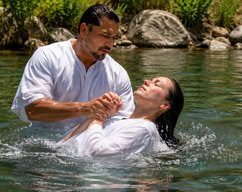
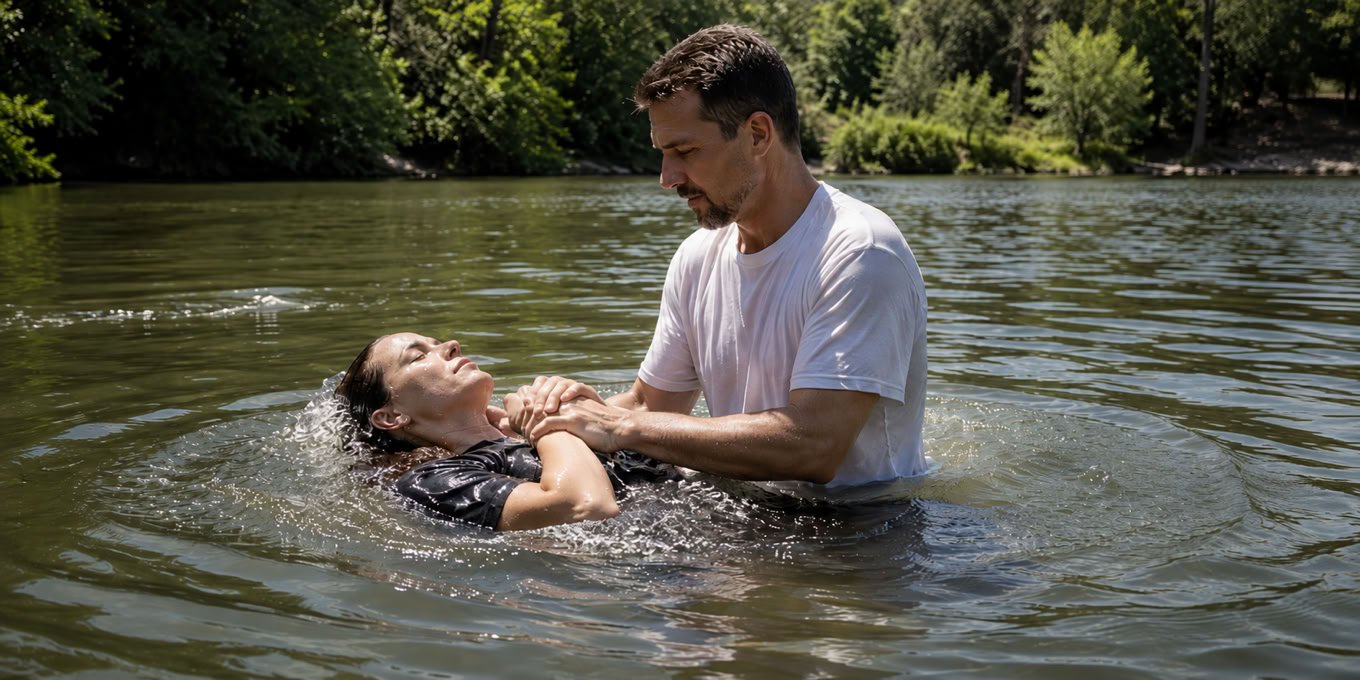
There are not two separate Christian baptisms, one of water and another of the Spirit. Paul tells us that just as there is only one Lord and one faith, there is also “one baptism” (Ephesians 4:5). Water and the Holy Spirit are not competing alternatives. They belong together in Christian baptism.
That helps explain what Jesus meant when he said, “No one can enter the kingdom of God unless he is born of water and the Spirit” (John 3:5). He was speaking of a single rebirth, one involving both water and the Holy Spirit.
Some Protestants argue that the water in this verse refers to natural birth, while the Spirit refers to spiritual birth. But why would Jesus mention natural birth as a prerequisite for entering the kingdom of God? Everyone who hears his words has already experienced natural birth. The point Jesus was making was that Nicodemus needed to experience another kind of birth, one that would give him new life in the Spirit.
We find the same connection between water and the Spirit in Peter's sermon on Pentecost. When the people asked what they must do, Peter answered, “Repent and be baptized, every one of you, in the name of Jesus Christ for the forgiveness of your sins. And you will receive the gift of the Holy Spirit” (Acts 2:38).
Notice that Peter didn't present baptism as merely a public declaration of something that had already happened. He connected it directly with the forgiveness of sins and the gift of the Holy Spirit.
Paul makes a similar connection when he writes that God saved us “through the washing of rebirth and renewal by the Holy Spirit” (Titus 3:5). Once again, washing, spiritual rebirth, and the Holy Spirit are presented together.
These passages show that baptism is the ordinary means by which a believer is born again and receives the Holy Spirit.
What baptism did you receive?
We find an especially revealing example in Acts 19.
When Paul encountered a group of disciples in Ephesus, he asked whether they had received the Holy Spirit when they believed. They answered that they had not even heard that there was a Holy Spirit.
Paul's response is fascinating. He immediately asked, “Then what baptism did you receive?” (Acts 19:3).
Why would he ask that?
Because Paul expected Christian baptism to be associated with receiving the Holy Spirit. If these disciples hadn't received the Spirit, something must have been wrong with their baptism.
And sure enough, they had received only John's baptism, which was a baptism of repentance in preparation for the coming of Christ.
When Paul explained the difference, they were baptized in the name of the Lord Jesus. Then Paul laid his hands on them, and the Holy Spirit came upon them. They began speaking in tongues and prophesying (Acts 19:4–7).
Notice that receiving the Holy Spirit was not something Paul regarded as unrelated to baptism. Quite the opposite. When he learned that these disciples had not received the Spirit, his first question concerned their baptism.
Something similar happened when Philip preached the Gospel in Samaria. The Samaritans believed his message and were baptized in the name of Jesus Christ. But when the apostles in Jerusalem heard about their conversion, they sent Peter and John, who prayed for the new believers and laid hands on them so that they would receive the Holy Spirit (Acts 8:14–17).
Here again, the laying on of hands appears to have produced a recognizable manifestation of the Spirit's presence. We aren't told exactly what happened, but the result was apparently observable. Simon the magician saw that the Spirit was given through the laying on of the apostles' hands and offered them money for the ability to do the same thing (Acts 8:18–19).
This helps explain why the laying on of hands figures so prominently in both accounts. Although the Spirit is given in baptism, his presence is not usually perceptible. The laying on of hands in these episodes was accompanied by a further reception or manifestation of the Spirit that others could recognize. In Ephesus, the disciples spoke in tongues and prophesied. In Samaria, something happened that even Simon could see.
The important point is that water baptism and the gift of the Holy Spirit were closely connected in the apostles' understanding of Christian initiation.
But Cornelius received the Spirit before baptism
There is an apparent exception to this pattern in Acts 10.
While Peter was preaching to Cornelius and his household, the Holy Spirit came upon those who were listening, even though they had not yet been baptized. The Jewish believers who accompanied Peter were astonished because the gift of the Holy Spirit had been poured out even on the Gentiles (Acts 10:44–46).
Doesn't this prove that baptism is unnecessary for receiving the Holy Spirit?
No. It proves that God is not limited to working through baptism.
And the circumstances explain why this extraordinary event occurred.
Until then, the early Church had been composed primarily of Jews, and the admission of Gentiles was a major issue. By pouring out the Holy Spirit on Cornelius and his household before they were baptized, God demonstrated unmistakably that Gentiles were to be welcomed into the Church on the same basis as Jews.
Peter himself recognized the significance of what had happened. He asked, “Can anyone keep these people from being baptized with water? They have received the Holy Spirit just as we have.” Then he ordered that they be baptized in the name of Jesus Christ (Acts 10:47–48).
Think about that. Even after Cornelius and his household had received the Holy Spirit, Peter still insisted that they be baptized.
If receiving the Spirit made water baptism unnecessary, this would have been the perfect opportunity for Peter to say so. Instead, he commanded it.
The episode therefore establishes two important truths: God can give the Holy Spirit before baptism, and receiving the Holy Spirit does not eliminate the need for baptism.
An exception to the ordinary pattern does not mean there is no ordinary pattern.
Conclusion
The New Testament repeatedly connects baptism with spiritual rebirth, forgiveness of sins, and the gift of the Holy Spirit.
Jesus spoke of being born of water and the Spirit. Peter told his listeners to repent and be baptized so that they would receive the Holy Spirit. Paul described salvation as a washing of rebirth and renewal by the Spirit. And when Paul encountered disciples who had not received the Spirit, his first question was about their baptism.
None of this makes much sense if water baptism is merely an outward symbol of a spiritual rebirth that ordinarily takes place independently of it.
Certainly, God can give the Holy Spirit before baptism, as he did with Cornelius. And the Holy Spirit can be given or manifested in different ways throughout the Christian life. But these truths do not erase the connection Scripture repeatedly makes between baptism and spiritual rebirth.
The Catholic position is not that God cannot give the Holy Spirit apart from baptism. It is that baptism is the ordinary means Christ established for giving us new life in the Spirit.
And that is exactly what we would expect from Jesus' words: “No one can enter the kingdom of God unless he is born of water and the Spirit.”
Featured Articles
Copyright © 2024–[YEAR] Catholicoutlook.me