Salvation and Grace
Salvation and Grace
Salvation and Grace
Salvation and Grace
Salvation and Grace
Salvation and Grace

Salvation and Grace

Catholic Outlook

Catholic Outlook
Catholic Outlook
What Must I Do to Be Saved?
The Bible gives several answers to that question
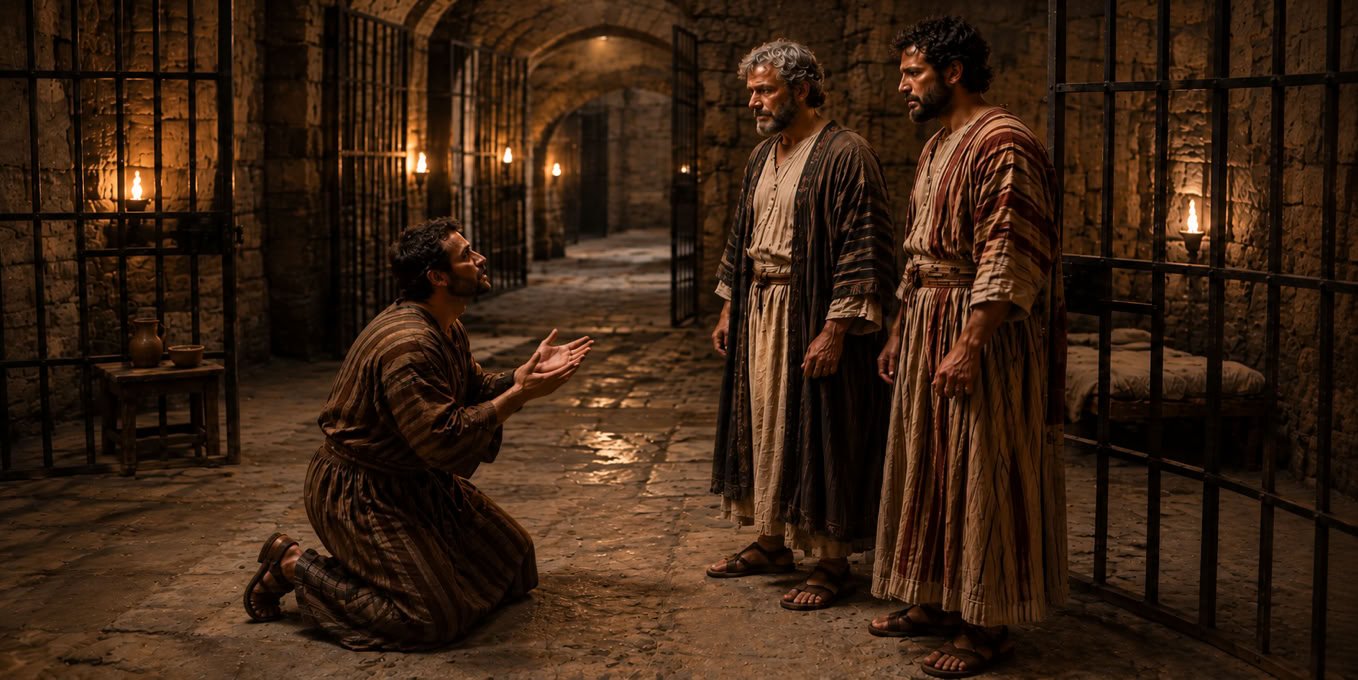
On one occasion, a jailer in Philippi asked Paul and Silas a question that millions of people have asked ever since: “What must I do to be saved?”
Their answer was simple: “Believe in the Lord Jesus, and you will be saved” (Acts 16:31).
But when someone asked Jesus what he must do to inherit eternal life, Jesus told him to love God and his neighbor (Luke 10:25–28). And when the people of Jerusalem asked Peter what they should do after hearing his preaching, he told them to repent and be baptized (Acts 2:37–38).
Why the different answers?
Obviously, all three were telling the truth. But an answer can be completely true without being a complete answer.
The Bible has quite a bit to say about what we must do to be saved. It tells us to believe, repent, be baptized, obey Christ, forgive others, remain in him, and persevere to the end. It also warns that certain sins can prevent us from inheriting the kingdom of God.
But doesn't the Bible also teach that salvation is a free gift? If there are things we must do to be saved, doesn't that mean we're earning our salvation?
A free gift—with conditions?
Scripture is clear that salvation is a free gift of God's grace, not something we can earn through our own efforts. Paul wrote:
“For it is by grace you have been saved, through faith—and this not from yourselves, it is the gift of God—not by works, so that no one can boast” (Ephesians 2:8–9).
But there's an important distinction between earning a gift and meeting the conditions for receiving it.
Suppose someone offered you a million dollars as a gift, on the condition that you come to his house to receive it. Would going to his house mean you had earned the money? Of course not. You would simply be accepting the gift on the terms established by the giver.
As we examine the biblical passages that answer the question, “what must I do to be saved?”, we'll find that some concern our initial conversion, others concern how we must live afterward, and still others concern our final salvation. But all of these are gifts of God, and he has the right to establish the conditions under which each is given.
So rather than deciding for ourselves what God should or shouldn't require, let's see what Scripture says.
Repent
When Peter preached to the people of Jerusalem on Pentecost, many of his listeners were deeply troubled by what they heard. They asked him and the other apostles, “Brothers, what shall we do?”
Peter replied:
“Repent and be baptized, every one of you, in the name of Jesus Christ for the forgiveness of your sins. And you will receive the gift of the Holy Spirit” (Acts 2:38).
Peter didn't merely tell them to believe. He told them to repent and be baptized.
Jesus himself emphasized the necessity of repentance. On one occasion, he warned his listeners, “Unless you repent, you too will all perish” (Luke 13:3).
Repentance means turning away from sin and turning toward God. It isn't simply acknowledging that we've done something wrong, but involves a genuine change of heart and a willingness to change how we live.
Believe in Jesus Christ
Of course, faith is essential to salvation. When the Philippian jailer asked Paul and Silas what he must do to be saved, they replied:
“Believe in the Lord Jesus, and you will be saved—you and your household” (Acts 16:31).
Jesus himself taught:
“For God so loved the world that he gave his one and only Son, that whoever believes in him shall not perish but have eternal life” (John 3:16).
And Paul wrote:
“That if you confess with your mouth, ‘Jesus is Lord,’ and believe in your heart that God raised him from the dead, you will be saved” (Romans 10:9).
These passages leave no doubt that faith in Christ is necessary for salvation. But do they establish that faith is the only thing necessary?
Not unless we're prepared to disregard the other passages in which Scripture tells us what we must do.
Notice that when Paul and Silas told the jailer to believe, they didn't say that repentance, baptism, obedience, or perseverance were unnecessary. In fact, Acts tells us that the jailer and his household were baptized that very night (Acts 16:33).
The command to believe was true, but it wasn't intended as an exhaustive explanation of everything involved in salvation.
Be baptized
Scripture also connects baptism directly with forgiveness and salvation.
We've already seen Peter's instruction on Pentecost to repent and be baptized for the forgiveness of sins. When Ananias came to Paul after his encounter with the risen Christ, he told him:
“And now what are you waiting for? Get up, be baptized and wash your sins away, calling on his name” (Acts 22:16).
And Peter wrote:
“This water symbolizes baptism that now saves you also—not the removal of dirt from the body but the pledge of a good conscience toward God. It saves you by the resurrection of Jesus Christ” (1 Peter 3:21).
Notice that Peter explicitly says baptism saves us, while immediately explaining that its saving power comes through the resurrection of Jesus Christ. Baptism is not an independent human achievement that earns salvation. I mean really, even if there were something we could do to earn our salvation, letting someone pour water on our head would probably not be that thing.
Christians disagree about precisely how baptism relates to salvation, and the Catholic Church recognizes that God is not bound by the sacraments he established and can save someone who cannot be baptized or who, through no fault of his own, doesn't know that he should be. Nevertheless, these passages make it difficult to dismiss baptism as merely an optional ceremony having no relationship to salvation.
Love God and your neighbor
On another occasion, an expert in the Law asked Jesus:
“Teacher, what must I do to inherit eternal life?” (Luke 10:25).
Jesus asked him what was written in the Law. The man replied:
“‘Love the Lord your God with all your heart and with all your soul and with all your strength and with all your mind’; and, ‘Love your neighbor as yourself’” (Luke 10:27).
Jesus responded:
“You have answered correctly. Do this and you will live” (Luke 10:28).
Compare that exchange with the conversation between Paul and the Philippian jailer.
The jailer asked what he must do to be saved, and Paul told him to believe in Jesus. The lawyer asked what he must do to inherit eternal life, and Jesus affirmed the commandments to love God and his neighbor.
Was Jesus teaching salvation by works while Paul was teaching salvation by faith? No. They were addressing different people in different circumstances, emphasizing different aspects of our response to God.
Indeed, Paul himself wrote:
“The only thing that counts is faith expressing itself through love” (Galatians 5:6).
Faith and love are not competing alternatives. Genuine Christian faith is meant to express itself in love.
Forgive others
Jesus also warned that our willingness to forgive others has consequences for our own forgiveness.
In the parable of the unforgiving servant, a king forgives a servant an enormous debt. But that servant subsequently refuses to forgive a fellow servant who owes him a much smaller amount. When the king learns what happened, he becomes angry and hands the unforgiving servant over to the jailers.
Jesus concludes the parable with a warning:
“This is how my heavenly Father will treat each of you unless you forgive your brother from your heart” (Matthew 18:35).
And in the Sermon on the Mount, Jesus taught:
“For if you forgive men when they sin against you, your heavenly Father will also forgive you. But if you do not forgive men their sins, your Father will not forgive your sins” (Matthew 6:14–15).
These are remarkably direct statements. Jesus explicitly connects receiving God's forgiveness with our willingness to forgive others.
This doesn't mean we earn God's forgiveness by forgiving other people. But it does mean that we cannot expect to receive his mercy while stubbornly refusing to extend mercy to others.
Obey Christ
Scripture also repeatedly emphasizes the necessity of obedience.
When a rich young man asked Jesus what good thing he must do to obtain eternal life, Jesus replied:
“If you want to enter life, obey the commandments” (Matthew 19:17).
In John's Gospel, we read:
“He who believes in the Son has eternal life; he who does not obey the Son shall not see life, but the wrath of God rests upon him” (John 3:36, RSV).
Notice that John contrasts believing in Christ with disobeying him. Faith and obedience are closely connected.
Jesus also told his disciples:
“If anyone loves me, he will obey my teaching. My Father will love him, and we will come to him and make our home with him” (John 14:23).
And the author of Hebrews wrote concerning Christ:
“Although he was a son, he learned obedience from what he suffered and, once made perfect, he became the source of eternal salvation for all who obey him” (Hebrews 5:8–9).
That last passage is especially significant. Christ is described as the source of eternal salvation for all who obey him.
Paul also wrote:
“To those who by persistence in doing good seek glory, honor and immortality, he will give eternal life” (Romans 2:7).
This is the same Paul who taught that salvation is a gift of grace, not something we earn through works. Clearly, he saw no contradiction between those teachings.
Some Christians explain these passages by saying that obedience is the inevitable fruit of genuine saving faith rather than a condition of salvation. That distinction deserves consideration. But whatever theological explanation we adopt, we cannot simply ignore the biblical connection between obedience and eternal life.
We may debate precisely how obedience relates to salvation, but we cannot dismiss it merely because we think a free gift shouldn't have conditions. That's God's decision to make, not ours.
Remain in Christ
Jesus did not merely tell his disciples to begin believing in him. He also told them to remain in him.
Using the image of a vine and its branches, he said:
“Remain in me, and I will remain in you. No branch can bear fruit by itself; it must remain in the vine. Neither can you bear fruit unless you remain in me” (John 15:4).
And he warned:
“If anyone does not remain in me, he is like a branch that is thrown away and withers; such branches are picked up, thrown into the fire and burned” (John 15:6).
The imagery is striking. A branch cannot survive apart from the vine, and Jesus warns of the consequences of failing to remain in him.
Christians disagree about whether this warning describes a genuine believer losing salvation or someone whose attachment to Christ was never genuine. But the warning itself is unmistakable: remaining in Christ matters.
The Christian life is not merely a matter of making a profession of faith at one particular moment. It involves a continuing relationship with Christ.
Avoid serious sin
The New Testament repeatedly warns that certain kinds of sinful conduct can prevent us from inheriting the kingdom of God.
Paul wrote to the Galatians:
“The acts of the sinful nature are obvious: sexual immorality, impurity and debauchery; idolatry and witchcraft; hatred, discord, jealousy, fits of rage, selfish ambition, dissensions, factions and envy; drunkenness, orgies, and the like. I warn you, as I did before, that those who live like this will not inherit the kingdom of God” (Galatians 5:19–21).
He issued a similar warning to the Corinthians:
“Do you not know that the wicked will not inherit the kingdom of God? Do not be deceived” (1 Corinthians 6:9).
He then listed various kinds of serious sin, including sexual immorality, idolatry, adultery, theft, greed, drunkenness, and slander.
And in Romans, Paul wrote:
“For if you live according to the sinful nature, you will die; but if by the Spirit you put to death the misdeeds of the body, you will live” (Romans 8:13).
Notice the phrase “by the Spirit.” Paul is not suggesting that we can overcome sin and earn eternal life through our own unaided efforts. It is through the power of the Holy Spirit that we are enabled to turn away from sin.
These warnings were addressed to Christians. Paul wasn't merely telling unbelievers that they needed to become Christians. He was warning those who already professed faith in Christ about conduct that could exclude them from the kingdom.
Christians disagree about whether such warnings describe the possibility of losing salvation or reveal that someone was never genuinely saved. But whatever explanation one adopts, the warnings are real, and they must be taken seriously.
Be willing to sacrifice everything for Christ
Following Christ may also require considerable sacrifice.
Jesus told his disciples:
“And everyone who has left houses or brothers or sisters or father or mother or children or fields for my sake will receive a hundred times as much and will inherit eternal life” (Matthew 19:29).
This doesn't mean that every Christian must literally abandon his family or possessions. But it does mean that loyalty to Christ must take precedence over everything else.
Paul also connected our future glory with our willingness to suffer with Christ:
“Now if we are children, then we are heirs—heirs of God and co-heirs with Christ, if indeed we share in his sufferings in order that we may also share in his glory” (Romans 8:17).
Christian discipleship is not always easy. Faithfulness to Christ may involve suffering, persecution, or the loss of things we hold dear. But Scripture presents these sacrifices in the context of the eternal life God promises to those who follow him.
Persevere to the end
Finally, Scripture repeatedly emphasizes the necessity of perseverance.
Jesus warned his disciples:
“All men will hate you because of me, but he who stands firm to the end will be saved” (Matthew 10:22).
And in his discourse about coming trials, he said:
“Because of the increase of wickedness, the love of most will grow cold, but he who stands firm to the end will be saved” (Matthew 24:13).
Paul likewise told the Corinthians:
“By this gospel you are saved, if you hold firmly to the word I preached to you. Otherwise, you have believed in vain” (1 Corinthians 15:2).
And he told the Colossians that Christ had reconciled them to God, to present them holy and blameless, “if you continue in your faith, established and firm, not moved from the hope held out in the gospel” (Colossians 1:23).
The letter to the Hebrews similarly warns Christians to beware of an unbelieving heart that turns away from God and says, “We have come to share in Christ if we hold firmly till the end the confidence we had at first” (Hebrews 3:14).
And Christ tells the church in Smyrna:
“Be faithful, even to the point of death, and I will give you the crown of life” (Revelation 2:10).
These passages concern Christians who have already heard and accepted the gospel. They are told to hold fast, continue in faith, and remain faithful. However Christians explain the relationship between perseverance and salvation, the instructions cannot simply be set aside.
God's gift, God's conditions
So what must we do to be saved?
As we've seen, Scripture gives several answers. We must believe in Christ, repent, be baptized, love God and our neighbor, forgive others, obey Christ, remain in him, and persevere to the end. We must also heed the warnings about sins that can exclude us from the kingdom of God.
These are not competing answers. Some concern our initial conversion, others our continuing life in God's grace, and still others our final salvation. Each is a gift, and none can be earned.
Paul brings divine grace and our response together when he writes:
“Continue to work out your salvation with fear and trembling, for it is God who works in you to will and to act according to his good purpose” (Philippians 2:12–13).
We are called to act, but even our ability to respond is sustained by God. Our response does not make salvation a wage owed to us.
The fact that something is a gift tells us that we cannot earn it. It does not tell us that there are no conditions for receiving it. The giver determines those conditions, not the recipient.
If God tells us to believe, we must believe. If he tells us to repent, we must repent. If he tells us to be baptized, we should be baptized. And if he tells us to obey him and remain faithful to the end, we should take those instructions seriously as well.
After all, the Philippian jailer did not ask, “What do I think should be necessary for salvation?” He asked, “What must I do to be saved?”
And the one who offers the gift has the right to determine the answer.
“What must I do to be saved?”
Featured Articles
Copyright © 2024–[YEAR] Catholicoutlook.me